Travel Tips
Can You Drink the Tap Water in Jersey? A Complete Visitor Guide
Updated 6 November 2026
When preparing for a holiday across the Channel Islands, one of the most common everyday questions travellers ask before packing their bags is whether you can drink the tap water in Jersey. Whether you are settling into a town boutique hotel in St Helier, enjoying a coastal stay overlooking St Ouen's Bay at Les Ormes Resort, or staying in a peaceful self-catering cottage, knowing whether your drinking water is pure and ready to drink straight from the tap makes travel simple. The immediate, clear answer is yes: mains tap water supplied across Jersey is safe, clean, and wholesome to drink without the need for a personal filter or expensive single-use plastic bottles.
Understanding the details of how island drinking water is collected, treated, and monitored can help you travel with total peace of mind. Jersey maintains an advanced water network regulated under strict local standards and aligned with modern European drinking water benchmarks. In this guide, I share everything visitors need to know about island water standards, storage reservoirs, mineral content, taste nuances, and practical tap habits so you can explore Jersey feeling refreshed, informed, and confident at every step of your trip.
The Core Question: Is Tap Water Safe to Drink in Jersey?
Mains tap water supplied across the island by Jersey Water is safe to drink without needing a domestic filter or purification device. Travellers arriving from the UK, mainland Europe, or further afield can simply pour a glass directly from the cold kitchen tap without any concerns about potability. For holidaymakers, this means there is no need to stock up on heavy plastic bottles from island grocery shops or rely on boil-water routines in your holiday rental.
The island’s public supply is not just acceptable; it operates under a robust regulatory framework designed to safeguard public health year-round. Mains water is treated through multiple stages of filtration and disinfection before reaching domestic properties, ensuring that bacteria, unwanted particles, and contaminants are thoroughly removed. Because the system is maintained to high European Union Directives, you can comfortably use tap water for brushing your teeth, preparing baby formula, cooking meals, and refilling your reusable water bottles before setting out along the island's coastal paths and walking trails.
Legal Standards and Regulatory Oversight
The safety of Jersey's drinking water is not left to chance; it is firmly embedded in island legislation. Jersey's public water quality is governed by the Water (Jersey) Law 1972, which sets comprehensive legal standards and wholesomeness parameters that tap supplies must satisfy. This legislation incorporates strict physical, chemical, and bacteriological parameters and limits to ensure that water supplied to homes and commercial premises is thoroughly wholesome.
In addition to local statutes, Jersey’s tap water quality is legally regulated to meet European Union Directives on water quality. These directives represent some of the most rigorous water quality benchmarks in the world, setting legal caps on chemical elements, trace minerals, organic matter, and microbial life. By adhering strictly to these benchmarks, Jersey Water ensures that island taps deliver water that equals or surpasses the purity standards visitors expect across the United Kingdom and continental Europe.
How Rigorously Is Jersey Tap Water Monitored?
Behind every clean glass of tap water is an intensive, continuous scientific testing regime. Jersey Water conducts rigorous physical, chemical, and bacteriological tests on approximately 7,000 samples annually. These scientific evaluations do not simply happen at the end of the line; they are conducted systematically across every key stage of the water supply chain throughout the entire calendar year.
Samples are drawn directly from raw water sources, treatment plants, raw water storage reservoirs, and customers' taps across different parishes. Dedicated laboratory staff perform these comprehensive evaluations at the Millbrook water quality laboratory in St Lawrence. By checking thousands of individual samples each year for microscopic organisms, chemical levels, and physical clarity, the laboratory ensures that any minor deviation in quality is identified and corrected before water reaches domestic taps, giving both residents and holidaymakers complete reassurance.
Where Jersey Gets Its Water: Reservoirs and Desalination
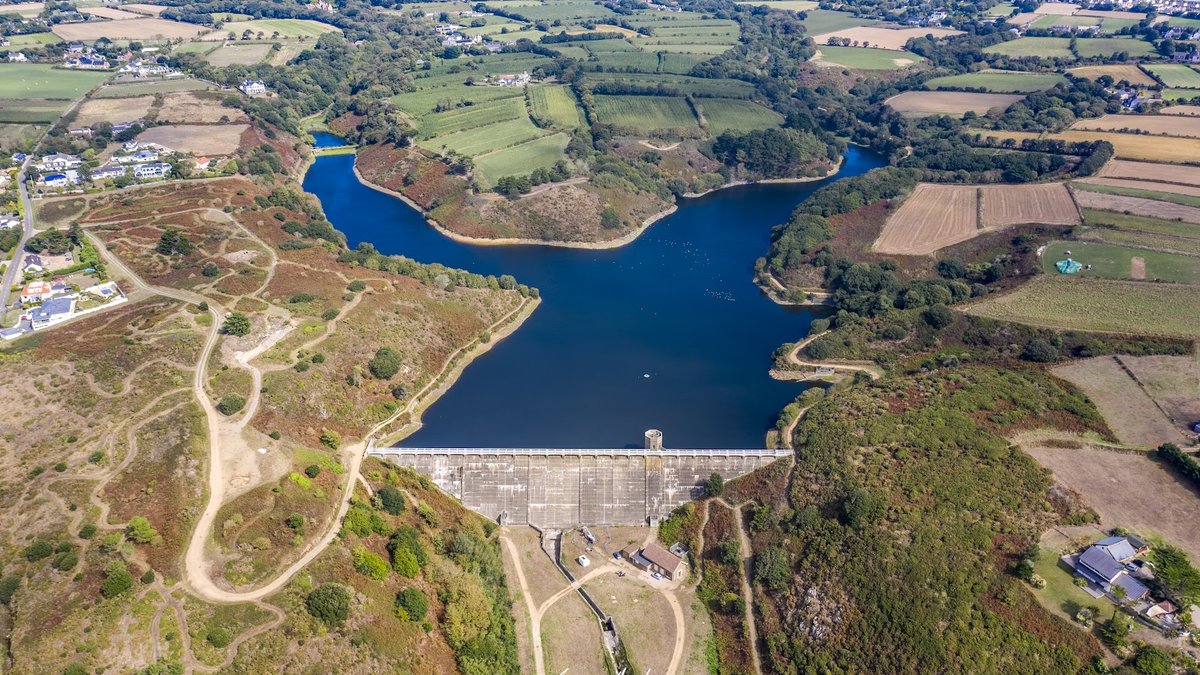
Jersey manages its freshwater catchment carefully, relying on six raw water storage reservoirs: Val de la Mare, Queen’s Valley, Handois, Millbrook, Dannemarche, and Grands Vaux. Together, they store untreated surface water collected from natural streams and raw water abstraction points. When completely full, these six reservoirs provide approximately 130 days of water supply for the island.
To safeguard supplies during prolonged dry periods, Jersey also operates the La Rosière Desalination Plant in Corbiere as a standby resource. Upgraded in 2016 and commissioned in 2017, the plant uses modern reverse osmosis technology to supply up to 10.8 megalitres of drinking water per day—roughly half of the island's total daily demand—supplementing reservoir storage whenever needed.
The Practical Kitchen Tap Rule: Where to Drink in Your Accommodation
Although mains supply across the island is completely wholesome, internal property plumbing creates an essential guideline for every traveller. Visitors and islanders are advised to drink cold water from the kitchen tap rather than bathroom taps or hot water systems. In many properties, bathroom outlets and hot water systems draw from a cold storage tank in the loft, which is not as fresh or safe as water sourced directly from the incoming mains.
The cold kitchen tap feeds straight from the mains, ensuring fresh, uncontaminated water. Whether you are staying at The Club Spa in St Helier, enjoying coastal lodgings at La Haule Manor, relaxing at Undercliff Guest House along Bouley Bay, or visiting La Croix Guest House, fill drinking glasses and bottles exclusively from the kitchen cold tap.
This same rule applies across self-catering properties and guesthouses, including Harbour View Self Catering Jersey, pitches at The Palms Campsite & Oasis Cafe, and accommodation at JAAC (Jersey Accommodation & Activity Centre). Always draw your drinking and cooking water from the cold kitchen tap.
Understanding Taste, Odour, and Chlorine in Jersey Water
Some travellers arriving in Jersey notice a faint, unfamiliar taste or a subtle scent of chlorine when pouring a glass from the tap. A small amount of harmless residual chlorine is deliberately maintained during the treatment process to keep the pipe network disinfected from the treatment works all the way to individual domestic taps. This tiny residual concentration is completely harmless to your health and serves as an active barrier against bacteria.
If you have a particularly sensitive palate and find the subtle chlorine aroma noticeable, an easy and safe practical fix is to chill your tap water in the fridge before drinking. Simply fill a clean glass carafe or reusable bottle from the cold kitchen tap, seal it, and place it inside the refrigerator for an hour or two. Cooling the water helps the minor residual chlorine dissipate naturally while making the water crisper and more refreshing. There is no need to purchase specialised filter jugs or store-bought mineral water simply to enjoy a clean, neutral-tasting drink.
Water Hardness and Harmless Kettle Residue
Another common observation among visitors concerns the mineral profile of Jersey's water supply and what shows up inside electric kettles in self-catering properties. The hardness of mains tap water across Jersey is classified as slightly to moderately hard, typically measuring between 108 and 179 mg/l as calcium carbonate (CaCO3). Because the island's geology features impermeable granite and relies predominantly on surface water collection from streams rather than deep limestone aquifers, Jersey's water avoids the severe scale build-up typical of chalk-heavy regions in southern and eastern England.
However, visitors may occasionally notice a light brown or brownish coating forming along the interior sides of an electric kettle. While travellers sometimes mistake this for dirt, rust, or heavy limescale, it is actually harmless manganese that occurs naturally in local island waters. Manganese is a natural trace mineral washed down from soil and rocks into stream catchments. Although it can cause a slight cosmetic discolouration on the metal or plastic lining of heating elements, it is totally harmless to consume and does not indicate any problem with water safety or purity.
Fluoride Facts for Travellers
Fluoride in municipal water systems is a subject of frequent enquiry among international visitors. Jersey Water does not add fluoride to the drinking water during the treatment process. While some jurisdictions worldwide intentionally fluoridate municipal supplies to promote dental health, Jersey relies strictly on natural water composition.
Trace quantities of fluoride do exist in the island’s tap water, typically measuring around 0.1 mg/l, but these low concentrations occur entirely naturally as rain and surface run-off interact with island soils and local rocks. If you maintain specific dietary or dental routines regarding fluoride, you can be assured that Jersey’s tap water remains in its natural, non-fluoridated state.
Table: Jersey Mains Water Profile at a Glance
To help you quickly reference the island's water parameters during your visit, here is a concise overview of Jersey's public water characteristics:
| Parameter | Mains Water Detail | Visitor Implication |
|---|---|---|
| Safety Status | Safe and wholesome straight from tap | No boiling or filtration required |
| Governing Law | Water (Jersey) Law 1972 & EU Directives | Meets stringent legal purity standards |
| Annual Laboratory Tests | Approximately 7,000 samples | Continuously monitored from source to tap |
| Primary Water Sources | 6 surface reservoirs (130-day capacity) | Clean surface collection from streams |
| Backup Source | La Rosière Desalination Plant (RO) | Provides up to 10.8 Ml/day in dry periods |
| Water Hardness | 108 to 179 mg/l as CaCO3 | Classified as slightly to moderately hard |
| Kettle Deposits | Brown manganese coating | Completely natural and harmless |
| Fluoride Treatment | No added fluoride (approx. 0.1 mg/l natural) | Untreated with artificial fluoride |
| Disinfection | Low residual chlorine | Harmless; dissipated by chilling in fridge |
| Best Source Indoors | Cold kitchen tap | Avoids unwholesome loft storage tanks |
Hydration Tips While Exploring the Island
Exploring Jersey’s varied parishes—from the historic streets around La Croix de la Reine at Charing Cross in St Helier to the bustling pubs like Benfica Sports B on Cattle Street—is best done with a lightweight, refillable water bottle by your side. Carrying a reusable flask is not only convenient but also helps protect Jersey’s fragile coastal ecosystems and sandy shores from unnecessary single-use plastic waste.
Here are several practical hydration habits to keep in mind throughout your trip:
- Top up before leaving your room: Make it a habit to fill your reusable bottle each morning using the cold kitchen tap in your hotel or holiday apartment.
- Chill water overnight: If you prefer cold water without any residual chlorine scent, fill your bottle the evening before and leave it in your accommodation's fridge overnight.
- Ask politely at cafes: Island hospitality businesses are accustomed to guests asking for tap water top-ups during coastal walks, bicycle tours, and cliff-path hikes.
- Bypass bathroom taps: If you need a quick drink or want to rinse your mouth while freshening up in your hotel en-suite, take a moment to walk through to the kitchen tap instead.
- Skip portable filter jugs: Pack lighter knowing that personal water filters, purification tablets, or bulky filtration carafes are completely unnecessary for Jersey mains water.
Summary and Practical Takeaways
Jersey provides an exceptional, highly regulated public water supply that visitors can enjoy straight from the cold tap with total confidence. The island's combination of six raw water reservoirs, a modern reverse osmosis desalination standby plant, and continuous testing of approximately 7,000 samples annually at the Millbrook water laboratory ensures that drinking water consistently meets both the Water (Jersey) Law 1972 and strict European Union Directives.
Remember to stick to the cold kitchen tap, keep a reusable flask chilled in your fridge if you wish to eliminate any trace chlorine taste, and pay no mind to harmless manganese residue inside kettles. With high safety standards and pure water flowing freely across the island, staying hydrated during your Jersey holiday is easy, safe, and sustainable.
Cover photo: Val De La Mare
By Alyssa.
Sources and further information
- Water Quality - Jersey Water
- Desalination Plant - Jersey Water
- Raw Water Storage Reservoirs - Jersey Water
- Water Quality FAQ - Jersey Water
Sources checked: 2026-11-06.