Things To Do
Botanic Gardens at Samarès Manor: A Practical Visitor Guide
Updated 30 October 2026
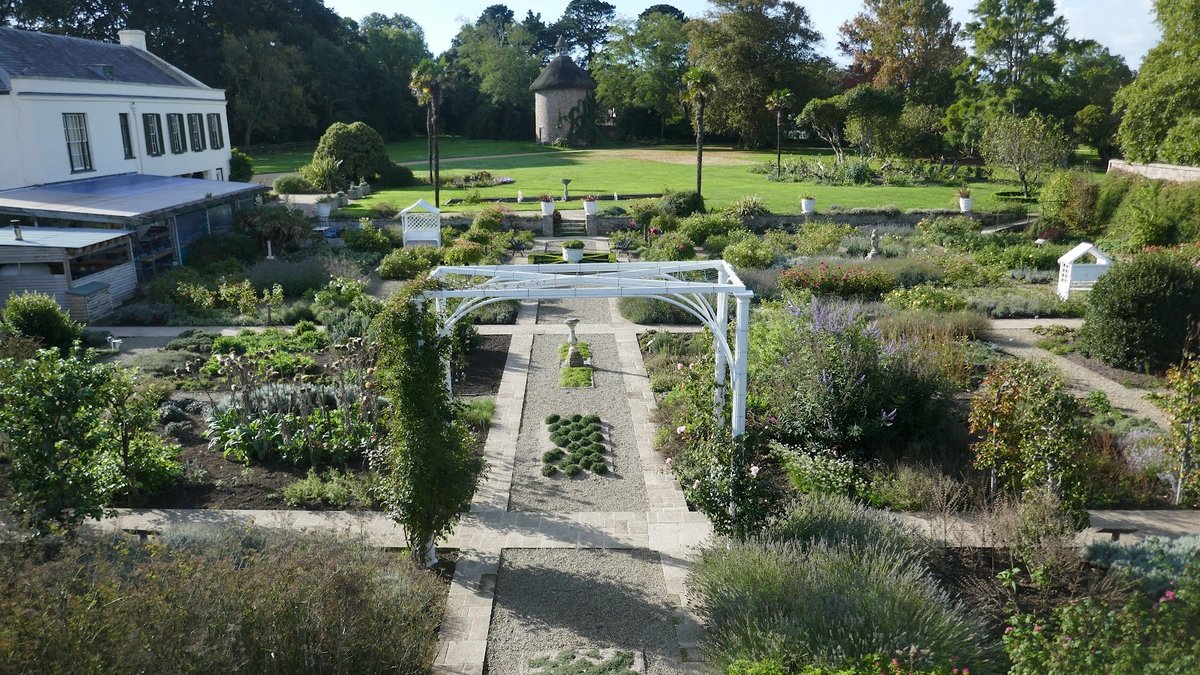
When planning a journey through Jersey, travellers often look for places where natural beauty and layered island history sit comfortably side by side. Nestled within the southern parish of St. Clement, the botanic gardens at samarès manor offer one of the Channel Islands’ most distinctive outdoor experiences. Spanning roughly fourteen acres of cultivated grounds, mature specimen trees, and formal designs, the estate brings together centuries of feudal heritage, early twentieth-century ambition, and diverse botanical planting.
Whether you are keen on quiet walks among medicinal collections, curious about island architecture dating back to medieval times, or looking to understand how the island's unique coastal geography shapes plant life, this historic estate presents a compelling excursion. In this practical guide, I will take you through what to expect across the grounds, how the gardens developed from reclaimed coastal salt marsh into a celebrated sanctuary, the architectural gems standing on the property, and the essential details for planning your visit.
The Setting and Origins of Samarès Manor
To appreciate the botanic gardens at Samares Manor, it helps to understand the very ground beneath your feet. The manor sits within the Vingtaine de Samarès, an administrative subdivision of the parish of St. Clement. The name offers a direct window into the local landscape: “Samarès” is derived from an Old French term meaning “salt-marsh.” Historically, this low-lying coastal part of Jersey was dominated by tidal marshes and damp coastal meadows, shaped by the maritime weather rolling off the English Channel.
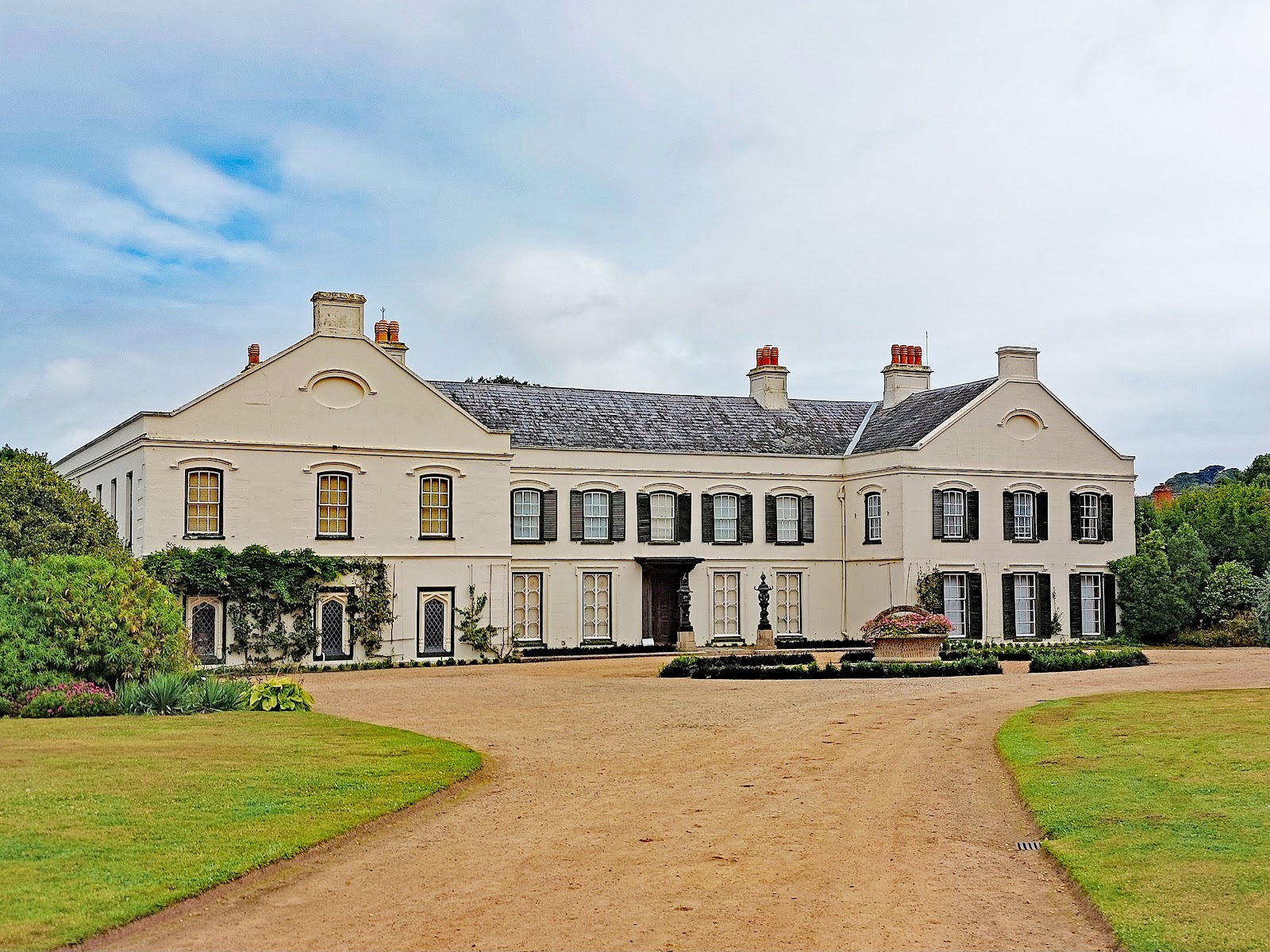
The manor itself boasts medieval origins, serving through the centuries as the ancestral seat of the Seigneur de Samarès, an influential feudal title in Jersey’s intricate history. Over many generations, the estate evolved from a fortified medieval stronghold into a distinguished country property. The most decisive transformation in its horticultural history, however, took place during the early twentieth century. In 1924, the property was purchased by Sir James Knott, a wealthy shipping magnate, politician, and philanthropist from northeast England who became the Seigneur of Samarès. Knott set about completely reinventing the grounds, undertaking extensive civil engineering works to drain and reclaim the damp salt-marsh landscape, which laid the direct foundation for the lush botanical spaces visible today.
Today, the estate remains the private home of the Obbard family, who are descendants of Lady Elizabeth Knott. While the historic manor house serves as a private family residence—meaning public visitor access is concentrated entirely on the extensive grounds—the surrounding landscape is preserved and opened to the public seasonally, allowing garden enthusiasts to enjoy its diverse horticultural collections.
Exploring the 14-Acre Botanic Gardens
The primary draw for travellers visiting the estate is the 14-acre expanse of landscaped grounds. Created originally in the 1920s under Sir James Knott's direction, the grounds were designed not simply as decorative lawns, but as a series of distinct, interconnected environments, each with its own mood, plant palette, and structural style.
The Herb Garden and Medicinal Plantings
Among the key horticultural features of the jersey botanic gardens samares manor is its dedicated herb garden. Cultivating herbs on island estates has roots stretching back to medieval monastic and manor traditions, where plants were grown simultaneously for culinary seasoning, domestic dyeing, household preservation, and curative medicine. The herb collections here reflect this rich functional lineage, offering visitors an opportunity to observe carefully curated plots containing medicinal herbs, fragrant culinary specimens, and traditional cosmetic plants.
Walking through the herb collections offers an engaging sensory experience. Rather than merely viewing plants from a distance, visitors can observe how traditional layouts group plants according to their historical usage, botanical families, and environmental preferences. It is an area that naturally encourages a slower walking pace, rewarding close observation of leaf textures, subtle flower forms, and fragrant foliage.
The Water Garden and Reclaimed Landscapes
Given the estate's location on land reclaimed from coastal salt marsh, water management has always been fundamental to the survival and flourishing of the landscape. The Water Garden celebrates this relationship with the water table. Using channels, ponds, and aquatic margins, this section of the grounds incorporates moisture-loving perennials and damp-soil architectural foliage that thrive in St. Clement's low-lying geography.
The presence of open water brings a calm, reflective quality to the property, creating distinct pockets of shade and coolness on warm midsummer afternoons. Dragonflies, water birds, and local amphibians find refuge around these damp margins, making the Water Garden an important micro-habitat for Jersey's local wildlife alongside its purely ornamental value.
The Japanese Garden
Another major highlight established during the 1920s transformation is the Japanese Garden. The early twentieth century saw widespread interest across Britain and the Channel Islands in East Asian landscaping, characterized by symbolic stonework, flowing water, ornamental bridges, and a restrained selection of specimen maples, conifers, and architectural shrubs. At Samarès Manor, this area was carved out to provide a distinct counterpoint to the formal European herb layouts and open parkland. The Japanese Garden remains an atmospheric spot to wander, emphasizing balance, texture, and serene transitions between stone, foliage, and water.
The Willow Labyrinth
For visitors travelling with family, or simply those who enjoy interactive garden features, the estate features a Willow Labyrinth. Woven living willow structures have long been prized in garden design for their blend of living horticulture and sculptural craftsmanship. The labyrinth creates a playful, immersive journey through supple, leafy pathways that change in density and tone as the growing season progresses from early spring greening into late summer fullness.
The Arboretum and Specimen Trees
Beyond the formal garden enclosures, the estate encompasses an arboretum and wider woodland parkland. The shelter belts and mature plantings protect the more tender perennial beds from coastal winds. The tree collection includes established native and exotic specimens that provide towering structure across the 14 acres, offering dappled shade, seasonal leaf color shifts, and nesting sites for resident birds. Taking the time to follow the paths into the arboretum gives visitors a deeper sense of the scale of Sir James Knott’s 1920s vision, which looked decades ahead to how mature canopy trees would eventually shape the estate horizon.
Historic Architecture on the Estate Grounds
While the living plant collections represent decades of thoughtful horticulture, the built heritage scattered across the grounds links The Botanic Gardens and Samarès Manor to many centuries of Channel Island history. Even with the house interior kept private, a stroll through the grounds provides close exterior views of several remarkable historic structures.
The Medieval Undercroft and Manor House
The architectural core of Samarès Manor is an H-plan building featuring ground-floor Tudor arched windows, bearing testament to successive centuries of remodeling and domestic expansion. Yet the oldest surviving element of the entire manor complex is situated beneath its west wing: the historic undercroft. Believed to date back to the 11th or 12th century, this vaulted undercroft is thought to have served as an early medieval crypt dedicated to Saint Martha. While the original building or chapel that once stood above it is no longer present, the existence of such an ancient stone chamber demonstrates that the site has been continuously settled and revered for close to nine hundred years.
Because the main residence is the private home of the Obbard family, visitor access is limited strictly to the grounds. However, the exterior views of the manor from the surrounding lawns provide wonderful architectural perspective, showing the harmony between Jersey granite stonework, tiled roofs, and the surrounding green borders.
The Historic Colombier
One of the true architectural gems on the estate grounds is the round colombier, or dovecote. Built of sturdy local stone, this freestanding circular tower is believed to be the oldest colombier in Jersey, with origins that may date back as early as the 12th century.
In medieval feudal Jersey, the right to construct and keep a colombier was a strictly controlled privilege reserved only for the seigneurial class. Doves and pigeons provided a vital source of fresh meat and fertilizer throughout the winter months, making the colombier both a practical agricultural asset and an overt architectural statement of feudal prestige. Standing beside this weathered round tower allows visitors to appreciate the agricultural mechanics of medieval manor life long before the property was turned toward ornamental botany.
The Farm Complex and Rural Life
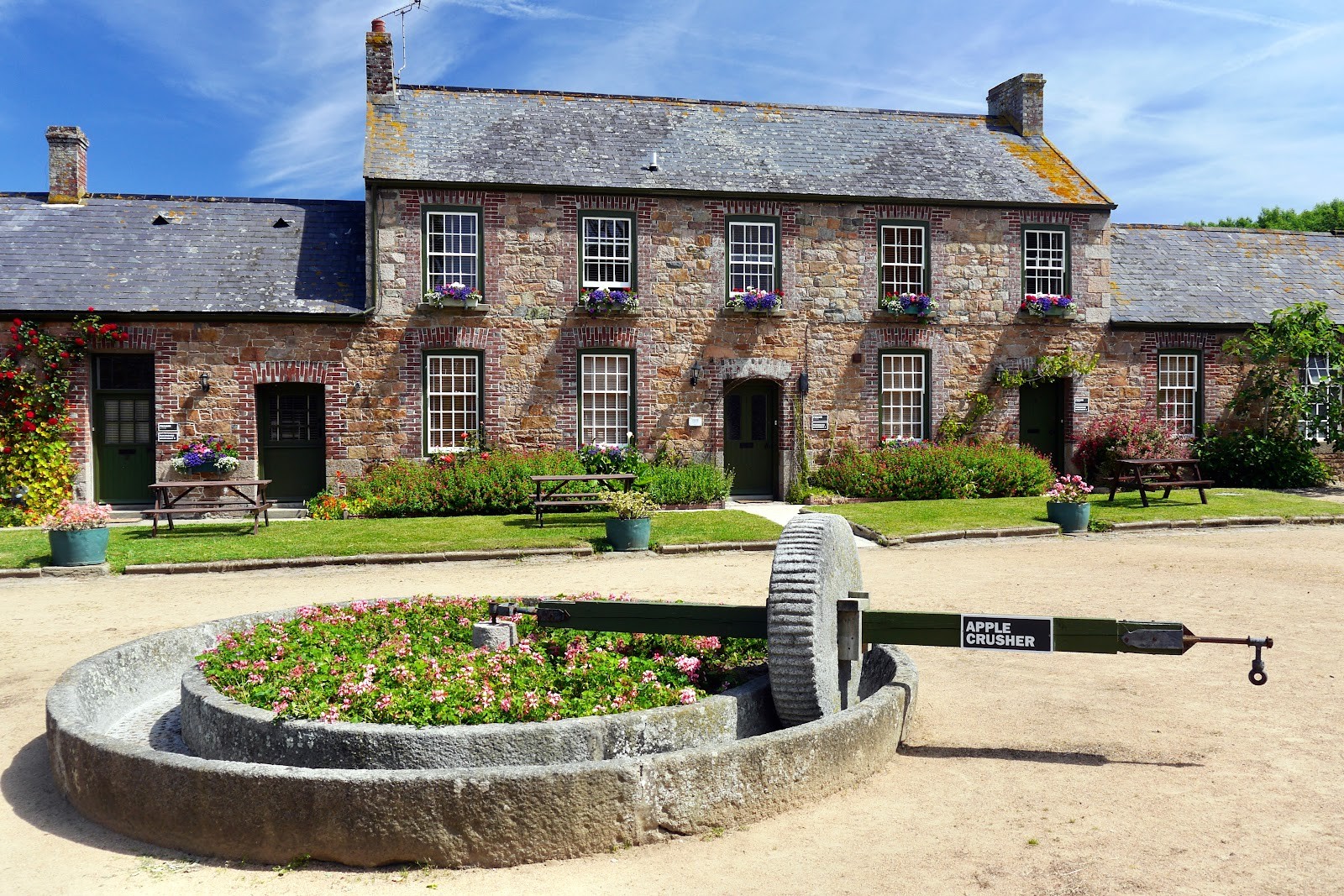
Directly east of the main manor house sits the Samarès Manor farm complex. The proximity of agricultural buildings to the seigneurial manor highlights the self-sufficient nature of historic Jersey country estates. The traditional granite farm buildings have been preserved and adapted thoughtfully over time. Several of these historical outbuildings have been converted into self-catering holiday accommodation, allowing guests to stay on the historic grounds and experience the quiet rural character of St. Clement after day visitors have departed.
For daytime visitors, descriptive records of the estate also highlight the presence of an on-site rural life museum. This collection showcases traditional farming implements, island tools, and artifacts that tell the story of rural labour in Jersey during earlier generations. Exploring these displays bridges the gap between the manor’s aristocratic history and the daily working lives of the tenant farmers, gardeners, and tradespeople who cultivated the parish.
To round off an afternoon of walking, visitors can take advantage of the estate’s on-site tea room. Situated within the historic surroundings, it offers a welcoming setting to pause for tea, coffee, and light refreshments while reflecting on the scenery.
Planning Your Visit: Seasonality and Practical Tips
Organizing a smooth visit to the botanic gardens samares manor requires taking note of a few practical considerations, particularly regarding operating seasons, visiting times, and walking conditions.
- Seasonal Opening Window: The botanic gardens operate seasonally, opening to the public from April until October. Visiting during the winter months is generally not possible, as the estate closes its gates to allow for seasonal maintenance, planting, and conservation. If you are planning an itinerary to Jersey, ensure your trip falls within this spring-to-autumn window.
- House Access: Keep in mind that public admission applies to the grounds only. The manor house itself is not open for standard public walkthroughs, as it remains a private family residence. All ticketed exploration centers on the gardens, parkland, colombier exterior, farm complex, and museum.
- Footwear and Walking Comfort: Exploring fourteen acres of diverse terrain—including gravel paths, open grass lawns, shaded woodland trails, and stepping paths around the water gardens—requires comfortable, flat walking shoes. Following wet weather, areas near the reclaimed marsh zones and water features can occasionally be soft underfoot.
- Pacing Your Tour: Plan to spend between two and three hours on site to comfortably explore each garden room, wander the labyrinth, examine the historic colombier, and stop by the tea room without rushing.
Getting to Samarès Manor
Samarès Manor is located along La Grande Route de St Clement in the southern part of Jersey (postal code JE2 6QW). Thanks to the island's relatively compact footprint, reaching the estate is straightforward from most starting points.
From the island capital of St. Helier, the journey east into the parish of St. Clement takes only a short drive or cycle ride. The low-lying coastal terrain makes cycling in this part of Jersey pleasant and relatively undemanding. Regular public buses operated across the island network connect St. Helier with St. Clement; visitors can check the latest island bus schedules upon arrival in town to identify the most convenient departure. If driving, the estate provides visitor parking, making it an easy starting point for wider explorations along Jersey’s picturesque southeast coast.
Samarès Manor in the Context of Jersey's Garden Trail
Jersey is celebrated for its mild maritime climate, which allows a broad range of cool-temperate and tender plants to flourish. While Samarès Manor represents the island's grandest historical manor garden, visiting it often inspires garden lovers to explore other distinct plant collections across the island.
For example, those fascinated by specialist cultivation might look to the celebrated glasshouses of the Eric Young Orchid Foundation in Trinity, world-renowned for its award-winning orchid breeding and tropical displays. Garden enthusiasts drawn to artisanal, organic planting will appreciate Judith Queree's Garden in St. Ouen, where more than two thousand unusual perennials and bog plants are densely arranged across a private cottage plot. In St. Brelade, the community-minded Reg's Garden provides a tranquil haven with koi ponds and peaceful seating. Alternatively, those interested in large-scale tree conservation can head west to The Forgotten Forest Arboretum near Val de la Mare Reservoir, which features international tree collections restored by local conservationists.
What sets the jersey botanic garden at Samarès Manor apart from these other destinations, however, is its distinct synthesis of deep medieval heritage, early twentieth-century philanthropic vision, and a wide diversity of compartmentalized garden styles all contained within a single historic estate.
Summary of Estate Highlights
To help you structure your itinerary when visiting the botanic gardens at Samarès Manor, here is a quick overview of what you will encounter across the grounds:
| Estate Feature | Historical or Horticultural Significance | What Visitors Can See |
|---|---|---|
| Herb Garden | Celebrates traditional medicinal, culinary, and household plants rooted in medieval and manor estate heritage. | Curated formal beds containing diverse medicinal and aromatic herb collections. |
| Historic Colombier | Dating back possibly to the 12th century; believed to be the oldest freestanding dovecote surviving in Jersey. | A circular medieval stone tower symbolising historic seigneurial privilege. |
| Japanese Garden | Created in the 1920s by Sir James Knott as part of an ambitious estate-wide redesign. | Ornamental water features, stone elements, bridges, and East Asian specimen plantings. |
| Water Garden | Reflects the estate’s geographic origins on land reclaimed from coastal salt marshes. | Canals, ponds, moisture-loving perennials, and damp-soil architectural plants. |
| Willow Labyrinth | A living sculptural installation offering interactive exploration. | Living, woven willow pathways designed to engage visitors of all ages. |
| Undercroft (West Wing) | 11th- or 12th-century vaulted crypt dedicated to Saint Martha, forming the oldest part of the house. | Viewed from the exterior grounds beneath the western wing of the manor. |
| Farm Complex & Museum | Traditional granite farm buildings to the east of the main residence. | Rural life museum displays, converted self-catering cottages, and the on-site tea room. |
Whether you come to study the medicinal specimens, discover the medieval dovecote, or enjoy a tranquil walk through the Japanese Garden, the botanic gardens at samarès manor deliver a rewarding, uniquely Channel Island day out. By keeping the seasonal April-to-October operating window in mind and allowing adequate time to meander its fourteen acres, you will experience one of Jersey’s most treasured botanical landscapes at its very best.
Cover photo: Samares Manor
By Alyssa.
Sources and further information
- Samarès Manor - Wikipedia
- Samares Manor - DiCamillo
- Samares Manor
- The Botanic Gardens and Samarès Manor
Sources checked: 2026-10-30.