Things To Do
Bioluminescence in Jersey: Guide to Glowing Shoreline Night Walks
Updated 27 October 2026
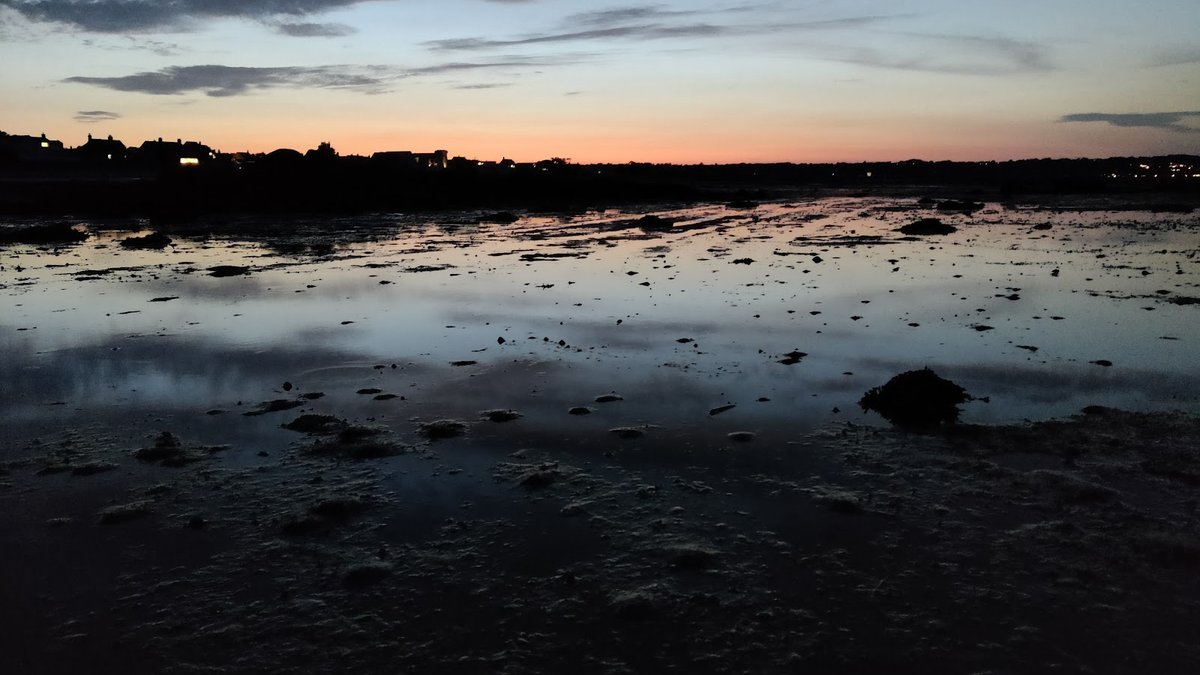
When the sun dips below the horizon and the Atlantic waters recede from the shores of Jersey, a remarkable natural environment emerges from the darkness. Across broad expanses of exposed sandbars, boulder fields, and hidden gullies, the nocturnal intertidal zone wakes up. For anyone planning a journey to the Channel Islands, setting foot onto the damp seabed after dusk to seek out glowing marine life is easily one of the most distinctive nature activities on offer. Joining a bioluminescence walk in Jersey allows you to experience the seashore not just as a sunlit daytime holiday retreat, but as a vast, quietly shimmering coastal wilderness.
I find that understanding Jersey's coastal bioluminescence requires a clear look at the island's unique geographic position, its dramatic tidal rhythms, and the specialised habits of its nocturnal marine inhabitants. From knowing which bays offer the ideal vantage points to realising why moon phases dictate your chances of spotting a glow, practical preparation is essential. Whether you want to witness the faint sparkles left in shallow rock pools or plan to join an organised expedition across the sand flats, this guide covers how, where, and when to experience Jersey bioluminescence safely and responsibly.
Understanding Jersey's Coastal Bioluminescence
Bioluminescence is the production and emission of visible light by living organisms, generated through natural biochemical reactions. While many travellers associate luminous seas exclusively with warm tropical waters or breaking waves illuminated by blooms of microscopic dinoflagellates, bioluminescence in Jersey UK waters presents itself in a delightfully subtle and grounded way. As the tide pulls away, small marine organisms, invertebrates, and worms sheltering in rocky hollows, gravel gutters, and shallow pools emit delicate emerald and blue-green glimmers. In certain conditions, stepping gently over saturated sand or disturbing standing water encourages these organisms to sparkle against the dark ground.
What makes Jersey such a standout destination for this phenomenon is its extraordinary tidal environment. Located within the shallow basin of the Bay of St Malo, roughly 85 miles south of England's southern coastline and merely 14 miles from the coast of France, Jersey commands one of the largest tidal ranges in the world. On major spring tides, the vertical range reaches around 12 metres (almost 40 feet). When this vast volume of water ebbs away at low tide, approximately 120 square kilometres of seabed becomes exposed, nearly doubling the island's physical land area and unveiling an almost lunar expanse of rocky reefs, sandbars, and gullies.
This immense intertidal expanse supports a remarkably rich marine ecology. The entire south-eastern coast—stretching continuously from La Collette in St Helier past the eastern parish fringes up to Gorey in St Martin—is designated as a Ramsar wetland of international importance. Sheltered by offshore reefs and shallow waters, this protected wetland provides an undisturbed sanctuary where nocturnal sea life flourishes beneath the waves by day, only to be briefly accessible when the ocean pulls back under the cover of night.
The Crucial Role of Moon Phases and Ambient Darkness
When planning an outing to search for glowing marine life, aligning your calendar with the lunar cycle is just as vital as checking the local tide tables. Many people assume that a bright, luminous full moon provides the ultimate setting for a late-night coastal stroll. However, if your primary goal is to observe subtle bioluminescent displays, ambient overhead light is actually your greatest obstacle. Bioluminescence displays are significantly harder to see during a full moon because bright moonlight overpowers the soft, delicate glow produced by marine life on the wet sand and within rock pools.
For the clearest and most vivid displays, darker nights are far superior. Heading out around the new moon, or during evenings when the moon has not yet risen above the horizon, ensures the velvet blackness required for human eyes to adjust properly. It generally takes about fifteen to twenty minutes for your pupils to fully dilate and achieve true night vision. Once calibrated to the natural seaside darkness, your eyes can detect even faint sparkles and soft green trails across the wet flats that would otherwise remain completely invisible under a brighter sky.
Conversely, guided moonlit excursions—often called moonwalks—cater to a very different kind of experience. Walking out across the exposed seabed under a brilliant full moon allows you to walk by natural lunar shadows, observing the starry sky and the reflections of stars twinkling in rock pools. While guides note that occasional bioluminescent sparkles can still be spotted during these brighter journeys, dedicated bioluminescence walks are deliberately organised on darker nights to offer walkers the greatest likelihood of seeing clear glowing displays.
Key Coastal Locations for Spotting the Glow
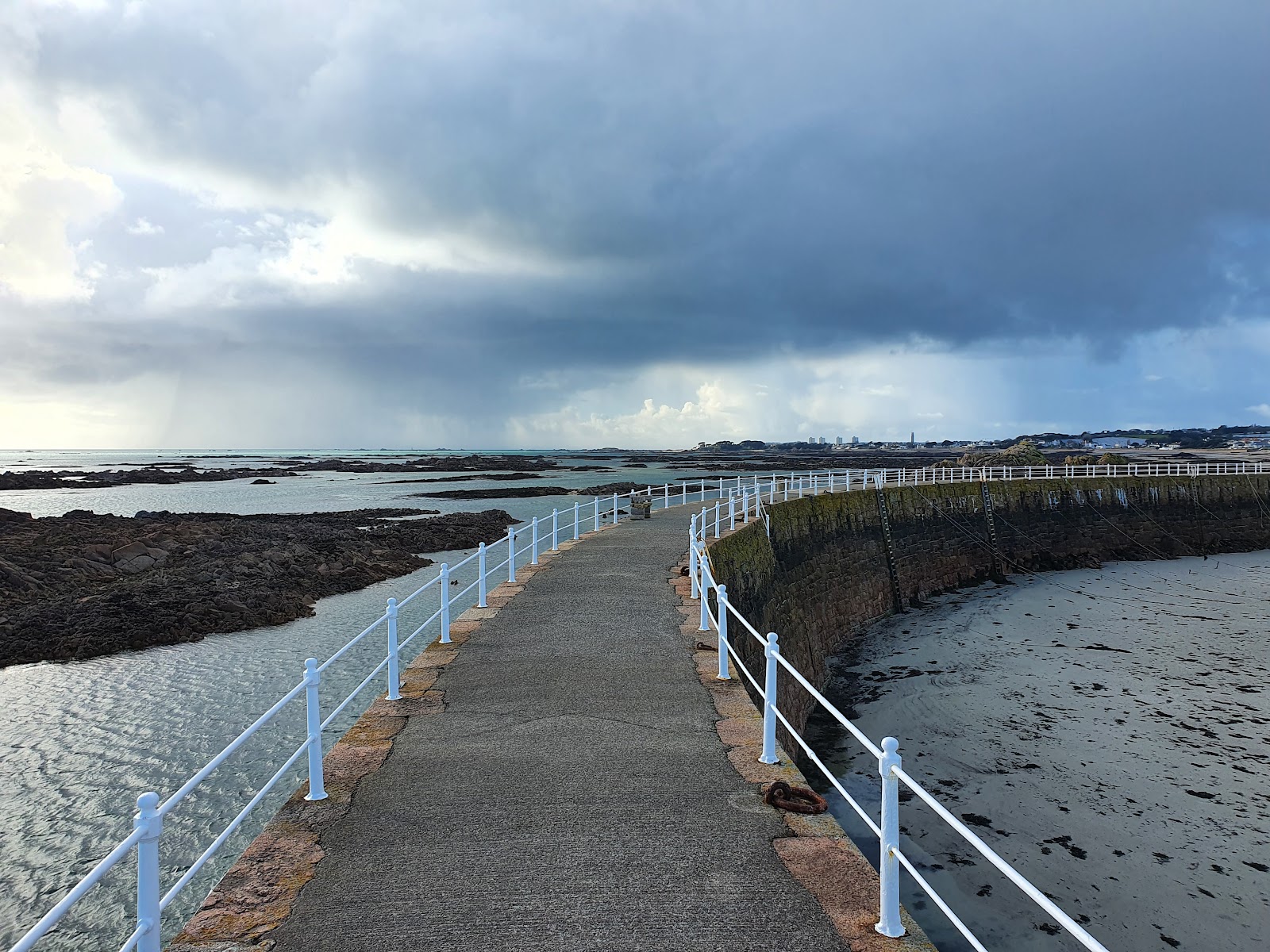
The vast majority of low-tide night exploration in Jersey takes place along the island's southeastern coastline. Because the seabed here features a gentle gradient shielded by ancient offshore reefs, it forms an exceptionally wide intertidal zone. The indisputable focal point for organised bioluminescence night walks is the shoreline surrounding La Rocque Harbour, located in the parish of Grouville.
La Rocque Harbour and Intertidal Reefs
La Rocque functions as the primary springboard for nocturnal walks across the seabed. During high tide, fishing boats float peacefully beside the stone pier; at low water, the sea retreats far towards the horizon, leaving behind an astonishing world of exposed granite reefs, damp sand banks, and winding gullies. Because the area sits well away from the direct glare of major urban lighting found in St Helier, La Rocque benefits from relatively dark coastal skies that significantly improve night-time visibility.
Guided bioluminescence walks regularly meet and depart from the car park and slipway at La Rocque Harbour. Specialist guides lead small groups out across the damp seabed after dusk, navigating between rock formations to seek out calm pools where bioluminescent creatures gather. Exploring this intertidal terrain lets you see marine organisms that spend daylight hours buried in gravel or concealed beneath thick blankets of wet seaweed to avoid drying out or falling prey to coastal seabirds.
The Offshore Wilderness Towards Seymour Tower
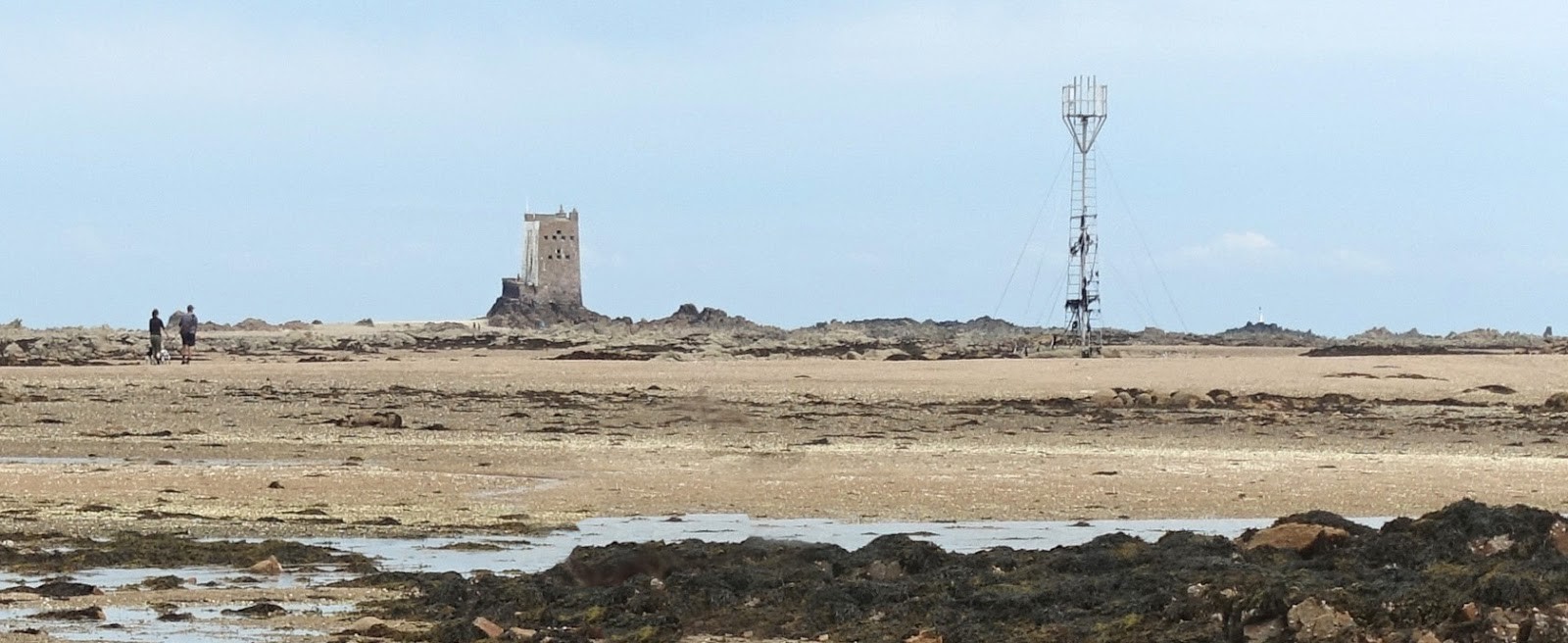
Further out on the rocky plateau sits Seymour Tower, an eighteenth-century defensive fortification situated on a rocky outcrop more than a mile offshore. Standard evening bioluminescence walks typically remain closer to the shoreline around La Rocque and do not travel all the way out to Seymour Tower. However, extended guided night walks and moonlight excursions do journey across the exposed seabed towards this historic landmark. On these longer routes, walkers traverse shallow gullies and broad sand flats where nocturnal sea creatures scurry across the seafloor, occasionally revealing fleeting luminous sparkles in their wake.
Specialist Guided Seabed Walks and Tour Formats
Venturing out onto an exposed ocean floor in complete darkness is never an adventure to undertake on your own. The sheer scale of Jersey's tidal zone and the complexity of its terrain make joining an experienced local guide the safest, most informative, and most rewarding way to experience the shoreline at night. Fortunately, the island is home to dedicated local guides who specialise in intertidal ecology and nighttime seabed navigation.
Professional Guided Excursions
Reputable operators conduct low-tide night tours across Jersey's south-east Ramsar zone, including Jersey Walk Adventures and Lou Wagstaffe's Sea Hare Photography. Both offer carefully managed excursions designed to interpret the nocturnal life of the intertidal flats while prioritising participant safety at every step.
Dedicated evening bioluminescence walks with Jersey Walk Adventures are typically organised as focused outings lasting roughly 1.5 hours. To maintain strong supervision and personal guidance across the dark flats, nighttime groups operate with lower guide-to-walker ratios than standard daytime outings. Instead of trekking miles across the mudflats at a rapid pace, these tours proceed at a measured, observational stroll, stopping beside promising rock pools and saturated sandbanks so that everyone's eyes can adapt to the dark and watch for glowing life.
Similarly, Lou Wagstaffe leads specialised nocturnal explorations departing from the car park at La Rocque Harbour. These guided walks frequently introduce visitors to the secret habits of nocturnal marine life using specialised equipment. On dedicated night walks, guides use UV torches across the exposed seabed. Under ultraviolet light, an array of hidden sea anemones, crustaceans, and coastal organisms fluoresce in vivid neon tones, revealing an astonishing visual spectrum that daytime visitors never get to witness.
Walks for Adults vs Family Excursions
Because navigating the rocky intertidal zone after dark requires sustained concentration, sure footing, and physical resilience, standard bioluminescence night walks around La Rocque are generally restricted to adults and teenagers aged 16 and over. Picking your way over slick, uneven granite shelves in the dark can be tiring, and it demands constant attention to where you place your feet.
Families travelling with younger children still have wonderful opportunities to experience the phenomenon. During the autumn and winter months, when darkness falls much earlier in the evening, operators organise shorter "Mini Bioluminescence" walks. These family-friendly sessions typically last between 1 and 2 hours, stay closer to the shore, and welcome children aged 6 and older. They provide an accessible, gentle introduction to nighttime marine exploration without subjecting younger walkers to late-night fatigue or challenging long-distance treks across rough terrain.
Crucial Low-Tide Safety and Tidal Hazards
Jersey's intertidal landscape is breathtakingly wild, but it is an environment that must never be underestimated—especially once night falls. Moving across the exposed ocean floor requires absolute respect for coastal hazards, as the waters of the Channel Islands present genuine dangers to unprepared walkers.
The Speed of the Incoming Tide
The foremost danger along Jersey's coastline is the sheer speed and power of the incoming tide. Spring tides earn their name not from the season of the year, but from the rapid manner in which the water springs forward. Because the south-eastern seabed is relatively flat and dissected by deep natural gutters, the incoming sea does not simply advance in an even, continuous line along the beach. Instead, rising water surges rapidly through low-lying channels behind you, quickly cutting off elevated sandbanks and reefs from the shore long before the entire area is submerged.
Many unwary or inexperienced walkers exploring without local knowledge have found themselves surrounded by fast-moving water, requiring emergency rescue. Professional guides manage this hazard through meticulous timing. Organised seabed walks strictly follow the falling tide outwards as the ocean recedes, and guides make sure that the group turns back towards the mainland shortly after low water turns. Setting off across these labyrinthine reefs in the dark without an intimate grasp of local tide times and drainage gutters is an unnecessary risk that should always be avoided.
Terrain and Footing Realities
The ground beneath your feet across the seabed is continually changing. During a single bioluminescence walk, you will encounter firm damp sand, loose gravel, shingle banks, slippery seaweed-covered boulders, and patches of soft mud. Furthermore, the route regularly crosses shallow gutters, drainage channels, and standing pools. Walkers must expect to get their feet wet, and in certain gullies, water can easily reach knee height.
Maintaining a steady, unhurried pace, watching your step carefully, and keeping a wide, balanced stance are crucial habits. Rushing across slick granite or attempting to hop across rocky gaps in the dark creates a significant risk of slipping or twisting an ankle.
What to Wear and Essential Preparation
Dressing properly for the maritime elements ensures that your focus remains entirely on the natural spectacle rather than cold feet. Even on pleasant summer nights, the temperature drops noticeably out on the exposed seabed once the sun disappears, and coastal breezes can make wet clothing feel uncomfortably brisk.
- Footwear: Everyday trainers or running shoes are wholly inadequate, as they saturate immediately in salt water. Tall Wellington boots with sturdy tread are the preferred choice for most participants, keeping your feet dry when navigating gutters. Some walkers choose neoprene water booties or wet-shoes worn with warm socks, accepting that their feet will get wet. Many local guides offer Wellington boots for loan or rental if requested when booking.
- Layered Clothing: Wear warm, flexible layers that can be adjusted as you move. A windproof and waterproof outer jacket is essential, even if skies look clear, as coastal conditions shift quickly. Waterproof over-trousers are an excellent addition, protecting against splashes and cold winds when wading through knee-deep gullies.
- Torches and Lighting: While you need dark conditions to view bioluminescence, you still need artificial light to navigate uneven ground safely. A headtorch or compact handheld torch is ideal for walking between observation spots. When you pause to inspect marine life, switching to a red-light mode preserves your night vision and prevents dazzling others. Specialist UV torches used for spotting fluorescent creatures are supplied by the tour guides.
- Practical Essentials: Organised walks run in most conditions, as rainy or windy weather alone does not halt an intertidal excursion. Bring any personal medical necessities, keep your phone in a secure waterproof dry pouch, and leave non-essential belongings locked safely in your vehicle or accommodation.
Seashore Etiquette and Wetland Conservation
Because Jersey's south-east coastline forms an internationally recognised Ramsar wetland, visitors share an important responsibility to tread lightly. The organisms responsible for bioluminescence and the diverse marine creatures that inhabit these tidal flats are sensitive to physical disturbance and habitat harm.
Accredited local guides operate under recognised conservation frameworks such as the UK-wide WiSe scheme, which provides formal training on minimising disturbance to coastal wildlife. When venturing onto the seabed, keeping the following Seashore Code principles in mind helps ensure this delicate marine ecosystem remains pristine:
- Mind Where You Step: Walk attentively and watch where you place your feet, taking care not to crush fragile tube worm colonies, delicate sponge formations, or shellfish beds beneath your boots.
- Handle with Care: Never roughly handle sea life. If your guide lifts a creature from a pool for closer viewing, touch or handle it only with wet hands to avoid damaging its protective outer mucus layer.
- Replace Displaced Stones: Countless nocturnal organisms seek shelter under the moist, shaded undersides of rocks during low water. If you or your guide gently roll over a small stone or piece of seaweed to inspect the life underneath, always return it slowly and carefully to its exact resting position. Leaving stones overturned exposes sensitive creatures to air and desiccation.
- Leave No Trace: Bring all rubbish back to mainland bins. If you notice washed-up plastic debris or discarded fishing line tangled in the weed, safely collect it and dispose of it onshore.
Summary: Planning Your Glowing Seabed Walk
Venturing out onto the seabed of Jersey after dark offers an unforgettable perspective on the Channel Islands' marine environment. Watching delicate pinpricks of bioluminescent light glow in dark pools, seeing fluorescent sea anemones pop into vivid view under UV light, and looking across a vast rocky expanse that will sit beneath twelve metres of sea just hours later is a deeply captivating experience.
To enjoy the best possible adventure, check the lunar calendar and aim for darker nights around the new moon. Book an excursion with an accredited local operator like Jersey Walk Adventures or Lou Wagstaffe's Sea Hare Photography, pull on a dependable pair of wellies, layer up against the night breeze, and prepare to discover a glowing side of Jersey that few standard daytime holidaymakers ever get to see.
Cover photo: Jersey Walk Adventures
By Alyssa.
Sources and further information
- Sea Hare Photography | Intertidal Walks
- Night Walks in Jersey - Jersey Walk Adventures
- Guided Seabed walk prices
- Intertidal Walks | Jersey Visitor Guide
Sources checked: 2026-10-27.