Attractions
Visiting La Hougue Bie: Guide to Jersey's Prehistoric Passage Tomb and Museum
Updated 20 October 2026
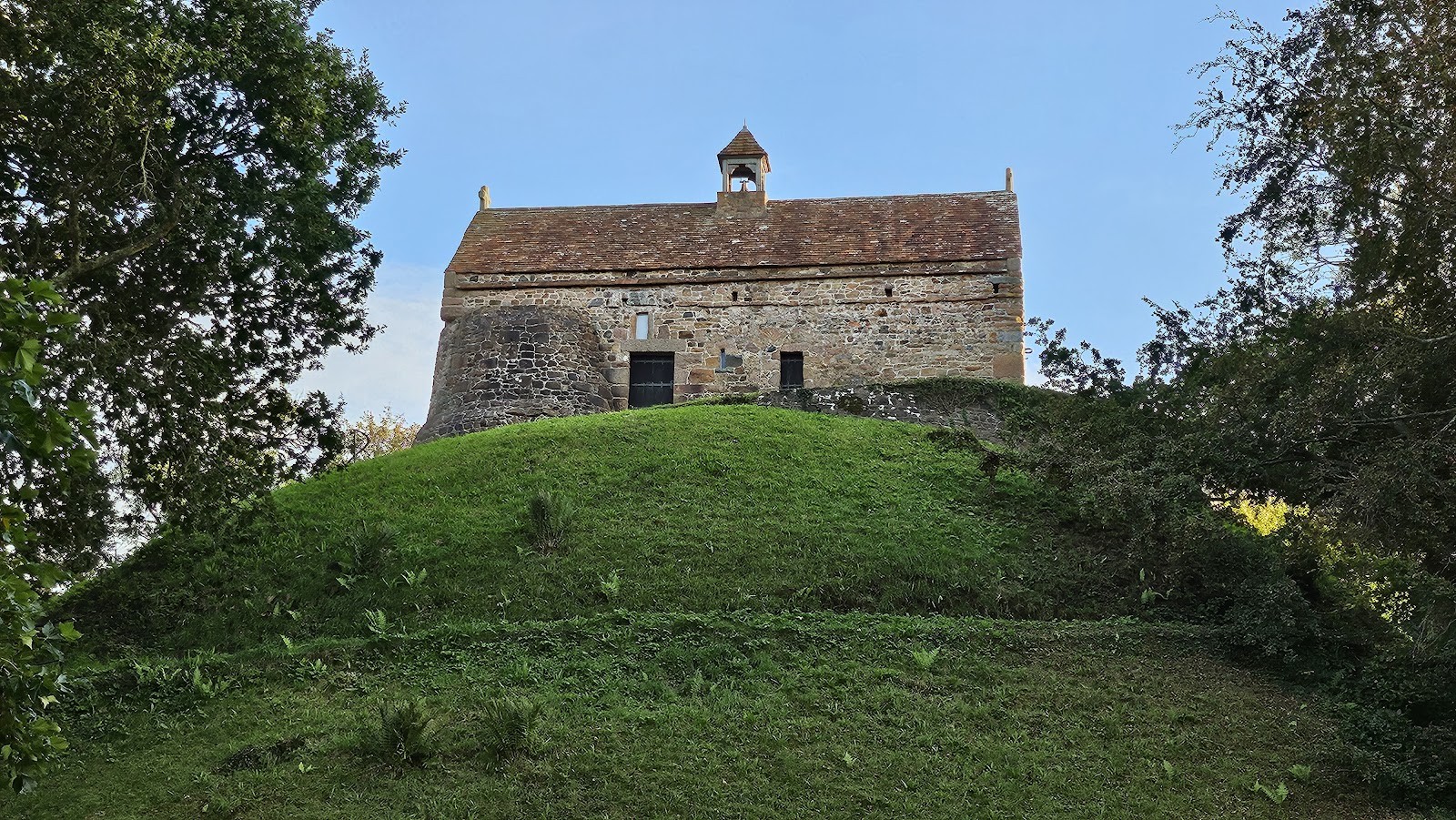
Tucked into the rolling rural landscape of Grouville in eastern Jersey, La Hougue Bie Museum preserves one of the most remarkable archaeological landscapes in north-western Europe. Far more than a single attraction, the site represents a multi-layered journey across six millennia of human activity. At its core stands a Neolithic passage grave constructed between 4000 and 3500 BC, placing it among the ten oldest surviving buildings on earth. Above that ancient burial chamber rises a monumental earthen mound capped by two medieval chapels, while an underground German command bunker from the Second World War cuts through its lower flank.
Whether your interests lean toward Stone Age ritual, medieval architecture, or wartime military history, La Hougue Bie presents these disparate eras side by side within tranquil, tree-shaded grounds. This guide covers what you will discover across the property, the stories behind its most significant excavations, and all the practical details necessary to plan an easy, well-paced day out.
The Prehistoric Chamber and Earthen Mound
The visual anchor of the site is its towering circular earth mound. Standing 12.2 metres high and measuring roughly 58 metres across, the mound forms an unmistakable landmark in the Grouville countryside. Its name reflects this distinct topography: hougue stems from the Old Norse word haugr, meaning an earth mound or heap, which entered local Norman French and the indigenous island language, Jèrriais. For millennia, the green mound concealed the ancient tomb beneath a mantle of earth, stones, and vegetation.
That hidden past re-emerged in September 1924, when the Société Jersiaise began systematic excavations into the mound. Their team broke through into an intact Neolithic passage grave, revealing an 18-metre-long stone passageway terminating in a central chamber with three distinct side recesses. The breakthrough caused immense excitement across the island; local archaeologist Dr Arthur Mourant famously pedalled his bicycle through neighbouring lanes to announce that the lost passage grave had been found. Members of the excavation team were the first people to step inside the tomb since its entrance was sealed over 5,000 years prior.
Archaeological evidence suggests the chamber served as far more than a resting place for the dead. It functioned primarily as a sacred ceremonial sanctuary, comparable in community role to a parish cathedral for Neolithic farmers. Inside, researchers discovered bone fragments belonging to at least eight individuals—including two confirmed females and four confirmed males—scattered across the stone floor rather than placed in orderly individual graves. These were accompanied by animal remains from cattle, sheep, pigs, and birds, alongside flint tools, transverse arrowheads, two ornamental beads, and a large broken quern stone set near the entrance to the terminal cell.
Excavators also recovered 19 decorative ceramic vase supports. Several displayed scorch marks indicating they had held embers or oil to serve as ritual lamps or burning stands before being deliberately broken on the floor. Beyond the artifacts, the monument showcases extraordinary prehistoric engineering: the entrance and stone corridor were constructed to align directly with the rising sun at both the spring and autumn equinoxes. When morning skies are clear during the equinox, the sun's first rays travel straight down the narrow passage, illuminating the megalithic back wall of the chamber in warm light.
The Medieval Chapels on the Mound
Ascending the winding grassy path up the side of the 12.2-metre mound brings visitors to another chapter in island history. Perched directly atop the prehistoric earthwork is a rare conjoined chapel structure comprising two linked Christian buildings: Notre Dame de la Clarté, constructed during the 12th century, and the Jerusalem Chapel, added in the 16th century.
Superimposing Christian places of worship upon pagan ritual sites was a deliberate practice across medieval Europe, sanctifying older landscapes while offering sweeping views over the surrounding parish. From the chapel terrace, the panorama looks across the eastern fields toward Grouville Bay and the sea. Inside, the quiet stone interiors retain an atmosphere of understated devotion, with whitewashed masonry, arched doorways, and historical display panels describing the complex evolution of the buildings.
The skyline atop the mound looked drastically different two centuries ago. In 1792, Philippe d'Auvergne incorporated the chapels into an elaborate neo-Gothic folly known as the Prince's Tower (La Tour d'Auvergne). The tower functioned as an ornamental residence and a vital island signalling station. Over time, the structure fell into disrepair and was eventually demolished in 1924, paving the way for the Société Jersiaise excavations that uncovered the prehistoric tomb beneath.
The Replica Neolithic Longhouse
Set among mature trees a short walk from the mound stands an engaging exercise in experimental archaeology: a full-scale, 20-metre replica Neolithic Longhouse. Built over two years by a dedicated team of island volunteers under the direction of ancient technology specialist Luke Winter, the building offers visitors a tangible impression of everyday community life during the New Stone Age.
The structure was assembled using authentic prehistoric methods, incorporating massive oak timbers, wattle-and-daub walling, and a steep, hand-thatched roof. Inside, the light drops away, creating a cool, sheltered space smelling gently of timber, earth, and dried reeds. Woven baskets, stone adzes, ceramic vessels, and animal skins show how a family group organised domestic living, food storage, and toolmaking under one roof.
To experience the longhouse at its most atmospheric, plan your visit around volunteer hearth demonstrations. Volunteer team members light and tend an authentic open fire inside the longhouse on Tuesday mornings between 10:00am and 12:30pm, as well as on Thursdays between 10:00am and 4:00pm. Watching smoke drift into the high thatch while chatting with knowledgeable volunteers brings the distant Neolithic world into immediate focus.
Searching for Jersey’s Celts: Le Câtillon II
Housed in an exhibition pavilion within the grounds is Searching for Jersey’s Celts, an exhibition centered on one of the most astonishing archaeological finds of modern times: Le Câtillon II. Discovered buried in a Grouville field by two metal detectorists in 2012, it represents the largest Celtic coin hoard ever uncovered anywhere in the world.
The hoard contained approximately 70,000 silver and bronze coins, alongside exquisite solid gold torcs, silver ingots, and intricate jewellery, all compacted together into a solid clay-encrusted mass over two millennia. The exhibition details the painstaking decade of micro-excavation and scientific conservation required to separate, clean, and document every individual item.
Beyond the sheer wealth on display, the exhibition explores why this fortune was buried. During the 1st century BC, Julius Caesar's legions marched across Gaul, devastating Celtic tribes and sparking mass movements toward the coastal fringes. The displays—presented in both English and French—weigh whether the hoard represents refugee wealth concealed during panic, a communal treasury gathered for resistance, or a sacred votive offering placed in the earth to seek divine aid during existential crisis.
The Second World War Command Bunker
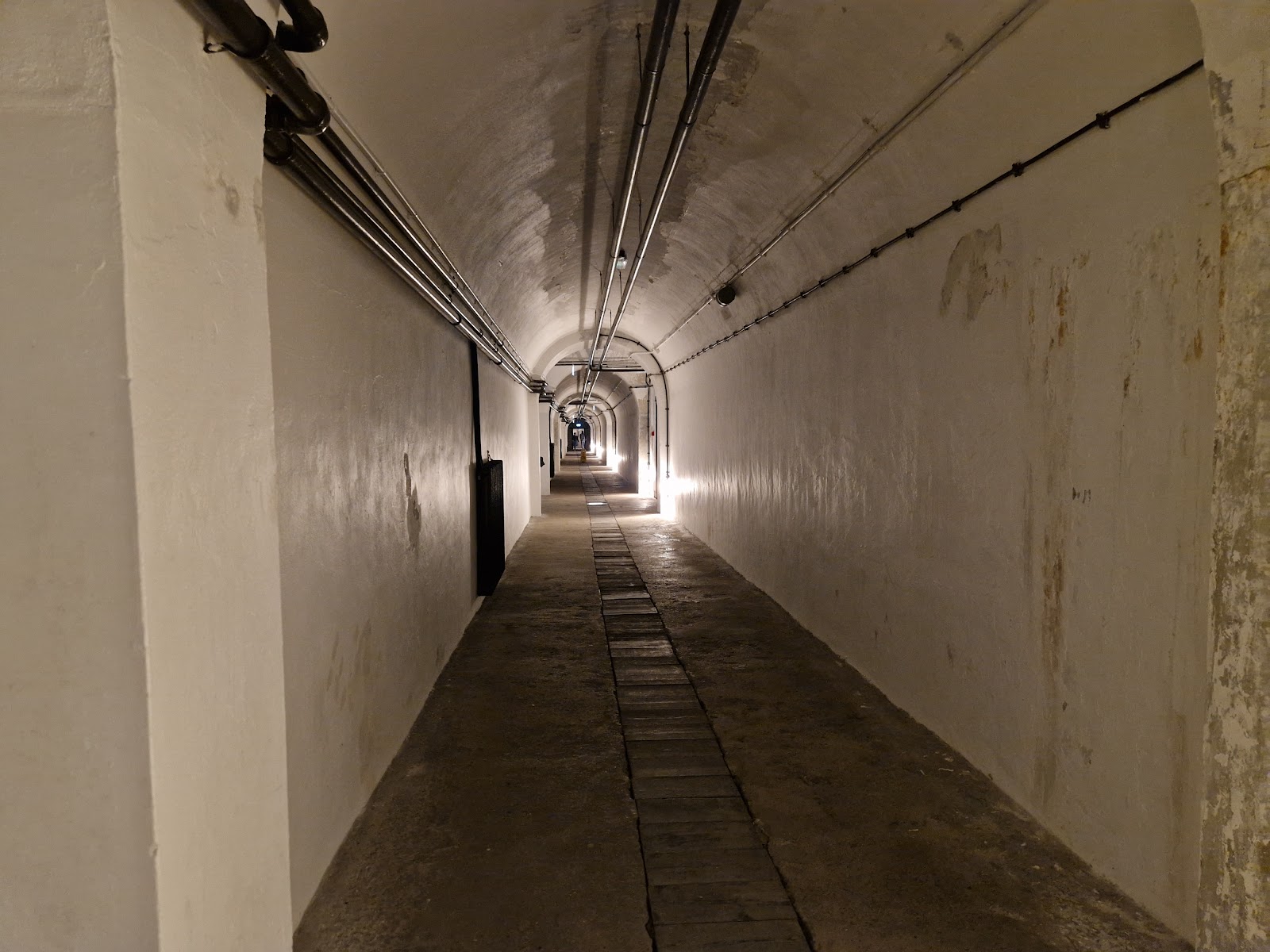
The layered timeline of La Hougue Bie extends directly into the 20th century. During the German Occupation of the Channel Islands between 1940 and 1945, occupying forces recognised the strategic value of the elevated mound, establishing an observation post and constructing a reinforced concrete command bunker into its southern flank.
Today, the subterranean bunker is open to visitors as an exhibition space dedicated to the forced and slave workers brought to Jersey by Organisation Todt. These labourers, drawn from across occupied Europe and the Soviet Union, were subjected to brutal treatment and exhausting conditions while constructing the island's Atlantic Wall fortifications.
Stepping down from the daylight of the grounds into the cool concrete rooms creates an immediate shift in tone. Historical displays, maps, and archival photographs recount the human cost of the island's fortifications, offering a quiet, respectful counterpoint to the ancient monuments above.
Comparing Jersey's Archaeological and Historic Sites
Jersey preserves a dense collection of megaliths and defensive installations. Understanding how La Hougue Bie compares with other island landmarks helps contextualise your itinerary:
| Site | Parish | Primary Eras | Key Visitor Highlights |
|---|---|---|---|
| La Hougue Bie | Grouville | Neolithic, Medieval, WWII | Intact passage tomb, 12m earth mound, dual chapels, Celtic coin hoard, replica longhouse, command bunker |
| La Pouqelaye de Faldouet Dolmen | St Martin | Neolithic (~4000 BC) | Open megalithic passage grave, 24-ton capstone, equinox alignment, free countryside access |
| Le Dolmen du Couperon | St Martin | Neolithic (~3250–2250 BC) | Eight-metre stone gallery grave (allée couverte) flanked by an upright stone peristalith |
| Jersey Museum & Art Gallery | St Helier | Prehistory to Modern Day | Geopark exhibits, Bronze Age gold torc, Victorian house, fine art collections |
| Elizabeth Castle | St Helier (Tidal Island) | Tudor to WWII | Offshore fortress reached by ferry or causeway, coastal battlements, military museum |
| Jersey War Tunnels - German Underground Hospital | St Lawrence | WWII Occupation | Extensive underground complex excavated by forced labourers, in-depth occupation museum |
| Strongpoint Corbière | St Brelade | WWII Atlantic Wall | Restored headland bunkers, heavy machine gun turret, CIOS open days and military displays |
While nearby dolmens like La Pouqelaye de Faldouet provide striking open-air megaliths where you can examine uncovered chamber layouts, La Hougue Bie is the only site in Jersey where the original covering mound and full interior tomb environment remain completely intact alongside comprehensive museum galleries.
Planning Your Visit: 2026 Opening Times and Admission
La Hougue Bie is managed by Jersey Heritage and operates on a seasonal schedule. For the 2026 visitor season, operating hours are:
- 1 March to 31 October: Open daily from 10:00am to 5:00pm.
- 1 November to 31 December: Open daily from 10:00am to 4:00pm.
- Scheduled Closures: The site is closed on 24, 25, 26, and 31 December, and 1 January.
Admission prices for the 2026 season are:
- Adults (16+): £15.45
- Seniors (65+): £14.45
- Children and Students: £10.25 (children under 11 must be accompanied by an adult or responsible person aged 16+)
- Family Ticket (2 adults and up to 2 children/students): £46.45
- Children under 6: Free admission
- Jersey Heritage Members: Free admission
Payment on arrival can be made via debit card, credit card, or cash in sterling. If you intend to explore other properties across the island—such as Mont Orgueil Castle, Elizabeth Castle, or Hamptonne Country Life Museum—purchasing a 7-day Heritage Pass offers unlimited entry to all Jersey Heritage visitor sites for a full week, saving considerable money over individual entry fees.
Visitors with disabilities pay standard admission rates and receive free admission for up to two accompanying carers. Sensory "take a break" bags equipped with calming fidget tools are available at reception for neurodivergent visitors or anyone seeking a mindful pause during their exploration.
Free Guided Tours
Joining an official site tour adds valuable depth to your visit. Volunteer guides lead free walking tours lasting approximately one hour (normal site admission applies). Tours assemble beside the ticket desk on weekday mornings:
- Monday, Tuesday, Wednesday, and Friday: 11:00am
- Thursday: 10:45am
Because these tours rely on volunteer availability, visitors keen on joining should call the site (+44 (0)1534 853 823) in advance to confirm the morning tour is taking place.
Directions, Public Transport, and Parking
La Hougue Bie is situated along La Route de la Hougue Bie, Grouville, JE3 9HQ (What3words: amber.sandwich.lobby), set among winding country lanes in the east of the island.
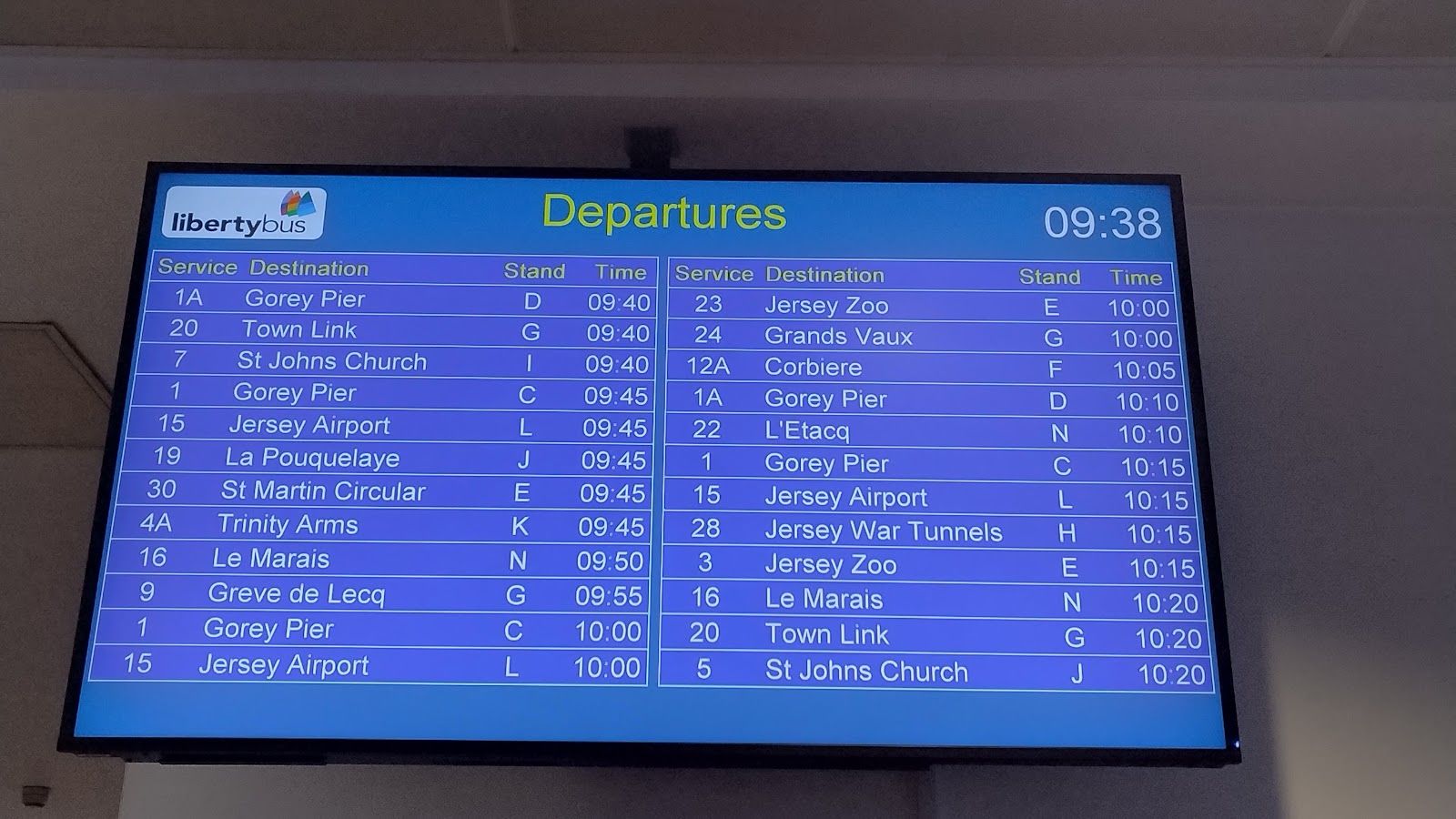
- By Bus: Public transport is highly recommended. Regular bus routes 13 and 21 operate between St Helier's Liberation Station and the eastern parishes, stopping near the site gates.
- By Bicycle: Jersey has a well-connected cycling network. The site sits directly along designated cycle routes 3 and 8. On-site bike racks are available near the entrance to lock up cycles safely.
- By Car: A small on-site car park is available free of charge for ticketed visitors. Spaces are limited and can fill up during midday hours in July and August, making public transport or cycling an attractive alternative.
Tearoom and Grounds Etiquette
Beside the ticket pavilion, the La Hougue Bie Tearoom offers an inviting stop for breakfast, light lunches, homemade cakes, and tea. The tearoom maintains slightly different hours to the heritage exhibitions:
- Summer: 9:00am to 4:30pm daily
- Winter: 9:00am to 3:30pm daily
A helpful perk is that the tearoom is open to the public without requiring site admission, making it a popular haunt for walkers exploring Grouville's rural lanes. Jersey Heritage members receive a 10% discount on tearoom purchases by showing their membership fob or card.
Visitors bringing dogs should note that dogs are not permitted on the main historic site, mound, or museum spaces, with the exception of registered assistance dogs. However, pet dogs on leads are welcome within the outdoor gravel seating area of the tearoom during an ongoing trial period.
Accessibility Considerations
Because La Hougue Bie is a protected ancient landscape, terrain varies significantly between sections of the grounds:
- The Neolithic Tomb: Entering the passage grave requires negotiating a narrow, low-ceilinged stone corridor with uneven stone underfoot. The chamber interior is dim and enclosed; visitors should wear sturdy, flat walking shoes and take care with head clearance.
- The Mound and Chapels: Accessing the medieval chapels atop the mound involves ascending an inclined grass footpath. The slope is relatively steep in places and can become slippery after rain, making it unsuitable for wheelchair users or visitors with severe mobility constraints.
- Museum and Bunker: The Searching for Jersey’s Celts exhibition gallery features level, wheelchair-accessible threshold access. The Second World War German bunker involves steps down into concrete subterranean corridors.
- Resources: Jersey Heritage provides downloadable access statements and visual stories on their website, detailing paths, gates, and surface textures to assist visitors before they set out.
With its blend of ancient megaliths, medieval chapels, dramatic Iron Age treasure, and wartime history, La Hougue Bie provides an exceptional window into the island's past. Taking the time to explore its quiet grounds, duck inside its prehistoric corridor, and experience the living history demonstrations at the longhouse ensures a deeply rewarding day in the Jersey countryside.
Cover photo: La Hougue Bie Museum - Rainer Kaspers
By Alyssa.
Sources and further information
- La Hougue Bie | Jersey Heritage
- La Hougue Bie Tour | Jersey Heritage
- La Hougue Bie - Wikipedia
- The Discovery Of La Hougue Bie | Jersey Heritage
Sources checked: 2026-10-20.