Things To Do
A Guide to Exploring Dolmens and Prehistoric Megaliths in Jersey
Updated 15 November 2026
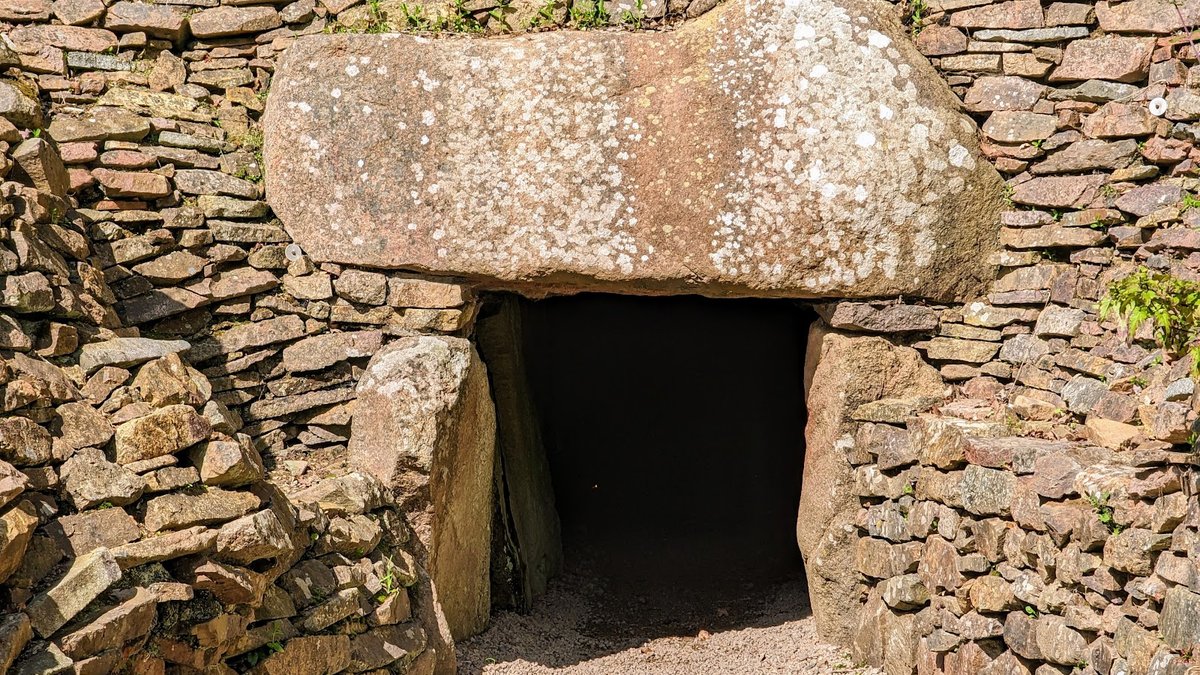
Jersey holds an extraordinary concentration of prehistoric monuments, where ancient earthworks, towering stone chambers, and gallery graves survive right across the island's fields, cliffs, and headlands. Long before modern settlements took shape, Neolithic farming communities quarried immense stones, dragged heavy slabs across the landscape, and engineered burial chambers aligned with the solar cycle. Visiting the dolmens in Jersey offers a wonderful opportunity to step back thousands of years into the island's earliest human heritage. In this guide, I share practical insights on where to locate these ancient megaliths, what makes each site distinct, and how to reach them using local walking routes and public transit.
Whether you are interested in famous astronomical alignments, massive multi-ton capstones, or atmospheric stone structures tucked into the dunes, Jersey's prehistoric landscape provides a fascinating journey through time. From the prominent mound at La Hougue Bie to remote clifftop sanctuaries in the northwest, exploring these sites reveals how islanders lived, built, and commemorated their dead thousands of years ago.
The Prehistoric Landscape and Neolithic Monuments of Jersey
The megaliths found across Jersey were primarily constructed during the Neolithic era, an epoch marked by the arrival of agriculture and permanent communities on the island. Rather than surviving solely as hunter-gatherers, these early residents worked the land, cleared plots, and shaped sacred monuments that have endured for millennia. The remains we see today consist mainly of passage graves, chambered tombs, gallery graves, and standing stones, reflecting a sophisticated understanding of engineering, astronomy, and community organisation.
Many of these sites were designed as communal burial chambers where human remains and ritual artefacts were interred over extended periods. Their monumental scale demonstrates remarkable teamwork, as huge stones were sourced from local rock outcrops and transported uphill without modern machinery. By exploring these monuments, visitors can appreciate the deep connection between prehistoric islanders, their local environment, and the celestial rhythms of the sun.
La Hougue Bie: Europe's Exceptional Passage Grave
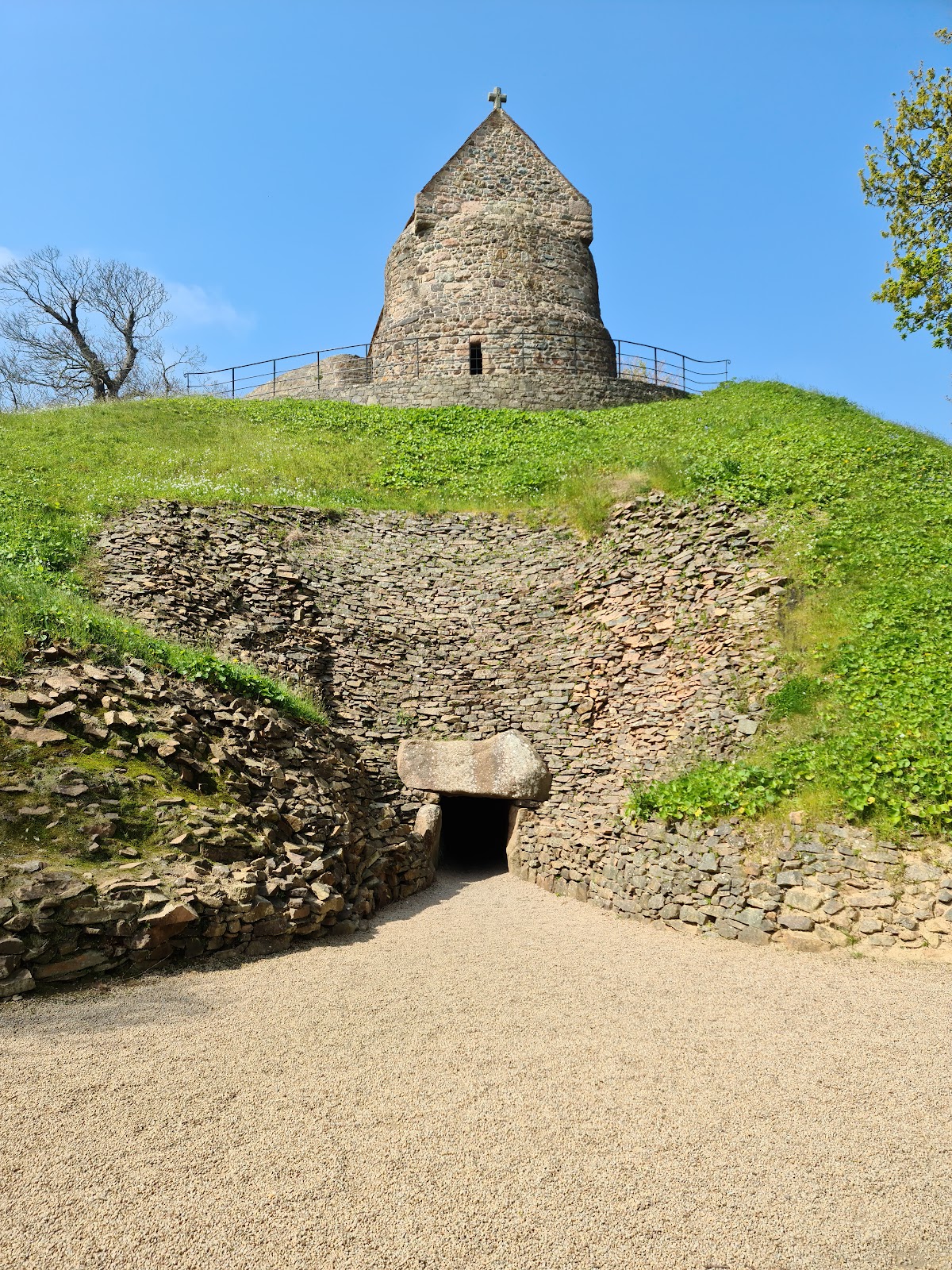
Widely regarded as one of the finest Neolithic passage graves in Europe, La Hougue Bie represents a towering landmark in the eastern landscape of Jersey. The prehistoric complex is defined by an enormous circular earth mound measuring roughly 12.2 metres in height and approximately 58 metres in diameter. Dating from between 4000 and 3250 BCE, the artificial hill conceals an expansive Neolithic passage grave that stretches approximately 20 metres in length, making it an extraordinary engineering achievement created long before Stonehenge or the Egyptian pyramids.
When the site was excavated in 1924 by the Société Jersiaise, archaeologists uncovered the monument's 20-metre-long entrance passage, which leads visitors deep into the earth toward a primary chamber flanked by three smaller side chambers separated by large upright stones. In the heart of the structure, an inner sanctuary area precedes a terminal cell housing an ancient stone cist. The cavernous interior served not only as a place of burial and collective ancestor commemoration, but also as a sacred subterranean hall where early island communities conducted ritual gatherings and communal ceremonies.
Beyond its sheer scale and architectural sophistication, La Hougue Bie is celebrated for its precise astronomical alignment. The long entrance passage is oriented so that the rays of the rising sun penetrate deep into the underground interior chamber during the spring and autumn equinoxes. Only twice each year does the morning light illuminate the subterranean sanctuary, highlighting the vital relationship that Jersey's early farming communities maintained with the cycle of the seasons, the solar calendar, and the renewal of their agricultural land.
Adding further historical depth to the location, the prehistoric earth mound is crowned by a medieval Christian chapel. This prominent hilltop chapel, situated directly above the burial chambers of the New Stone Age, forms a remarkable visual and cultural layer where medieval worship was deliberately established atop an ancient sacred landmark that had anchored the island's landscape for thousands of years.
La Pouquelaye de Faldouet: Megalithic Architecture Above Gorey
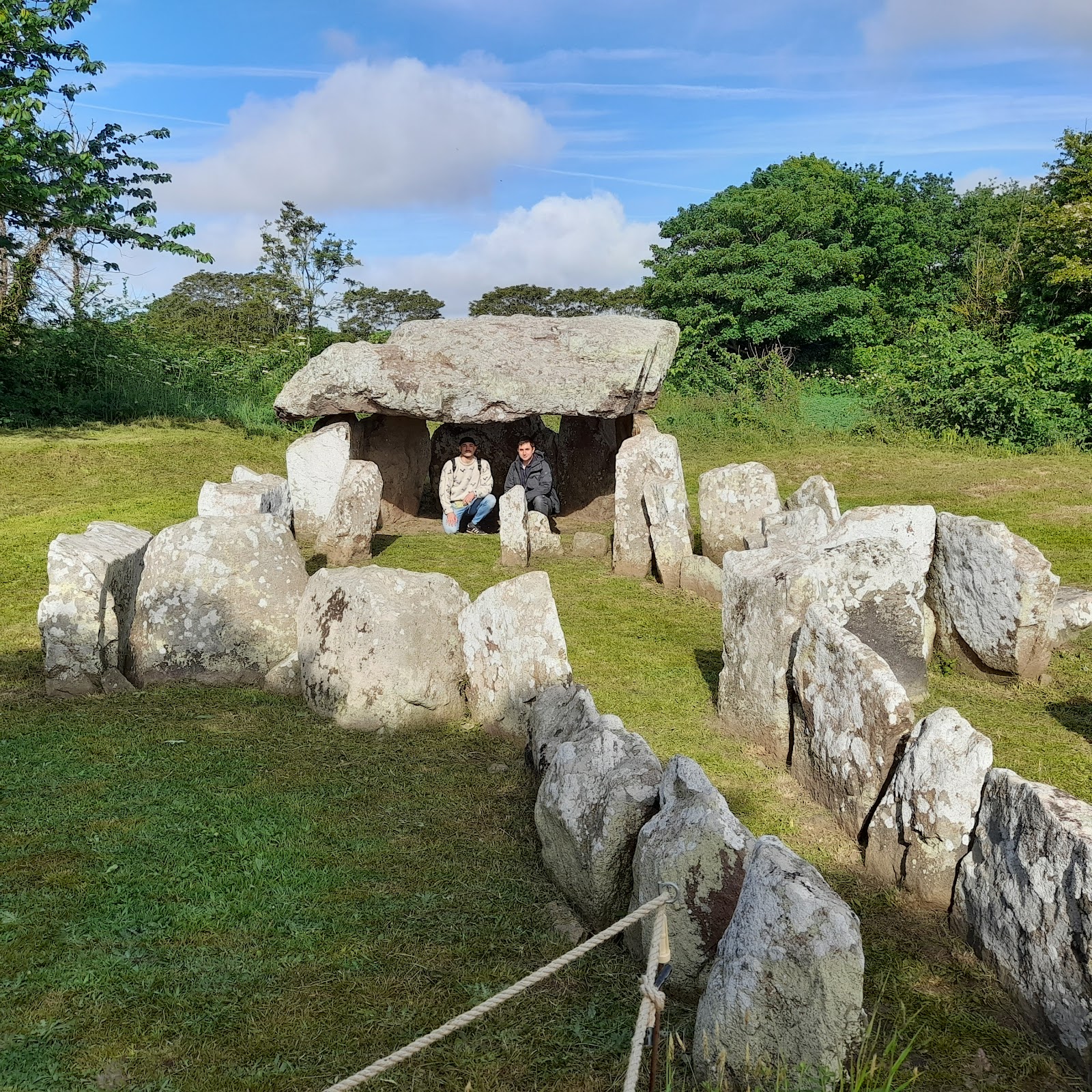
Perched on high ground overlooking the eastern coast above Gorey, La Pouquelaye de Faldouet is an approximately 6,000-year-old Neolithic passage grave. This impressive monument features an entrance passage measuring around five metres in length that opens into a large circular main chamber, which then connects to a distinctive double chamber. The structure is further framed by side compartments, drystone walling, and upright kerbstones.
One of the most striking features of Faldouet Dolmen is the massive capstone resting above its end chamber, weighing approximately 24 tonnes. Sourced from a rhyolite rock outcrop located about half a kilometre to the north, moving this gigantic block onto high ground represents a stunning prehistoric engineering feat. Much like La Hougue Bie, La Pouquelaye de Faldouet is oriented to align with the rising sun during the equinoxes, underlining the islanders' cultural reverence for the sun's journey across the sky. The elevated vantage point offers scenic views over the surrounding coastal countryside.
Grantez Dolmen: Overlooking St Ouen's Bay
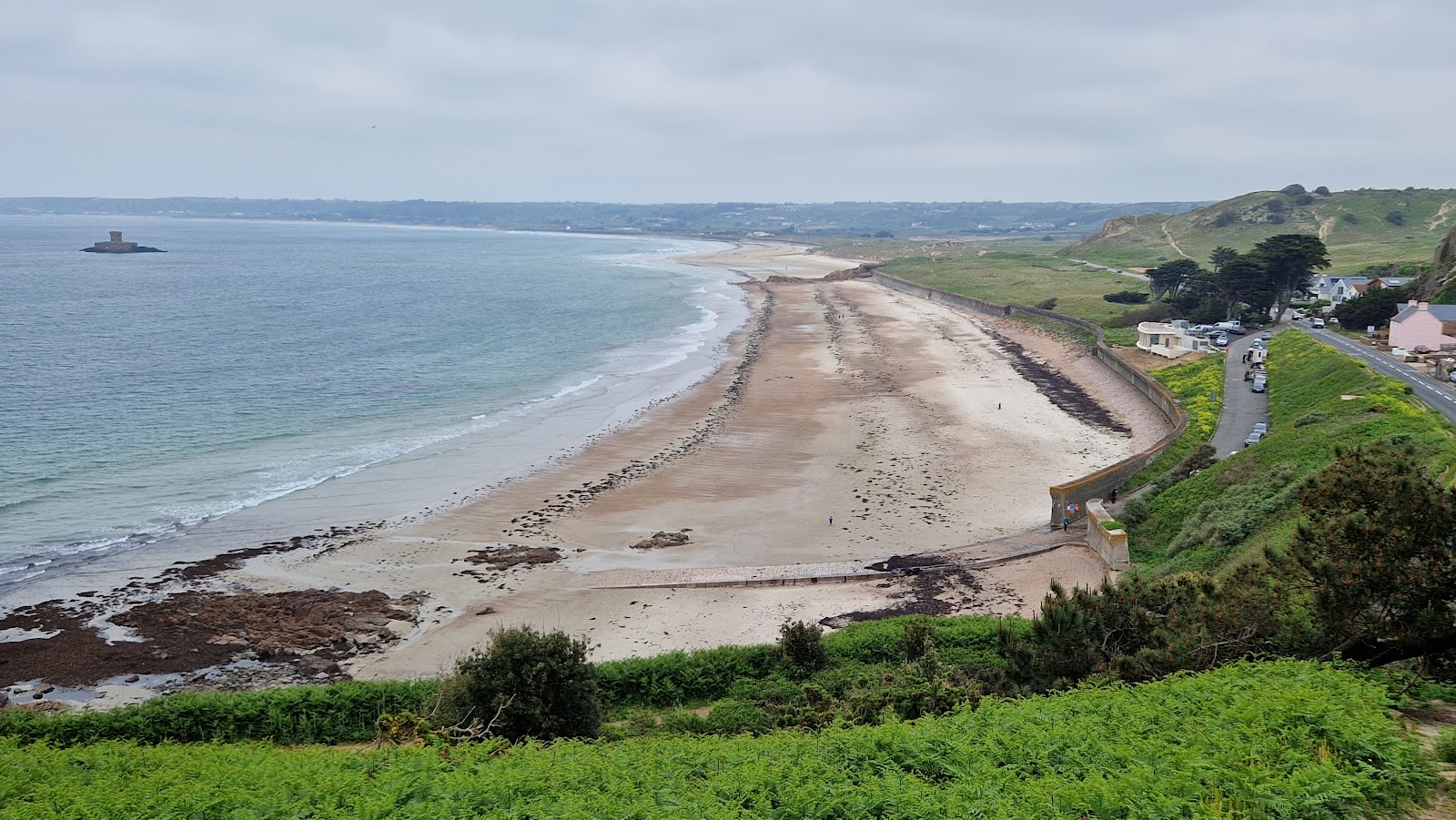
Moving across to the western side of the island, Grantez Dolmen—also known as Les Monts Grantez—is an ancient passage grave situated on high ground overlooking St Ouen's Bay from the north. Standing near the monument provides modern travellers with the same dramatic panoramic perspectives that prehistoric communities enjoyed, looking out over the Atlantic Ocean and the sweep of the western shoreline.
Excavations conducted at Grantez Dolmen revealed significant prehistoric funerary customs. Unusually, archaeologists uncovered eight complete skeletons buried within the chamber, alongside associated grave goods. These discoveries confirmed the monument's vital role as a communal resting place for the families who inhabited the western heights. The dolmen's elevated coastal setting makes it a particularly rewarding stop for those who enjoy combining archaeological exploration with wide coastal vistas.
Le Dolmen du Couperon: The Gallery Grave in Saint Martin
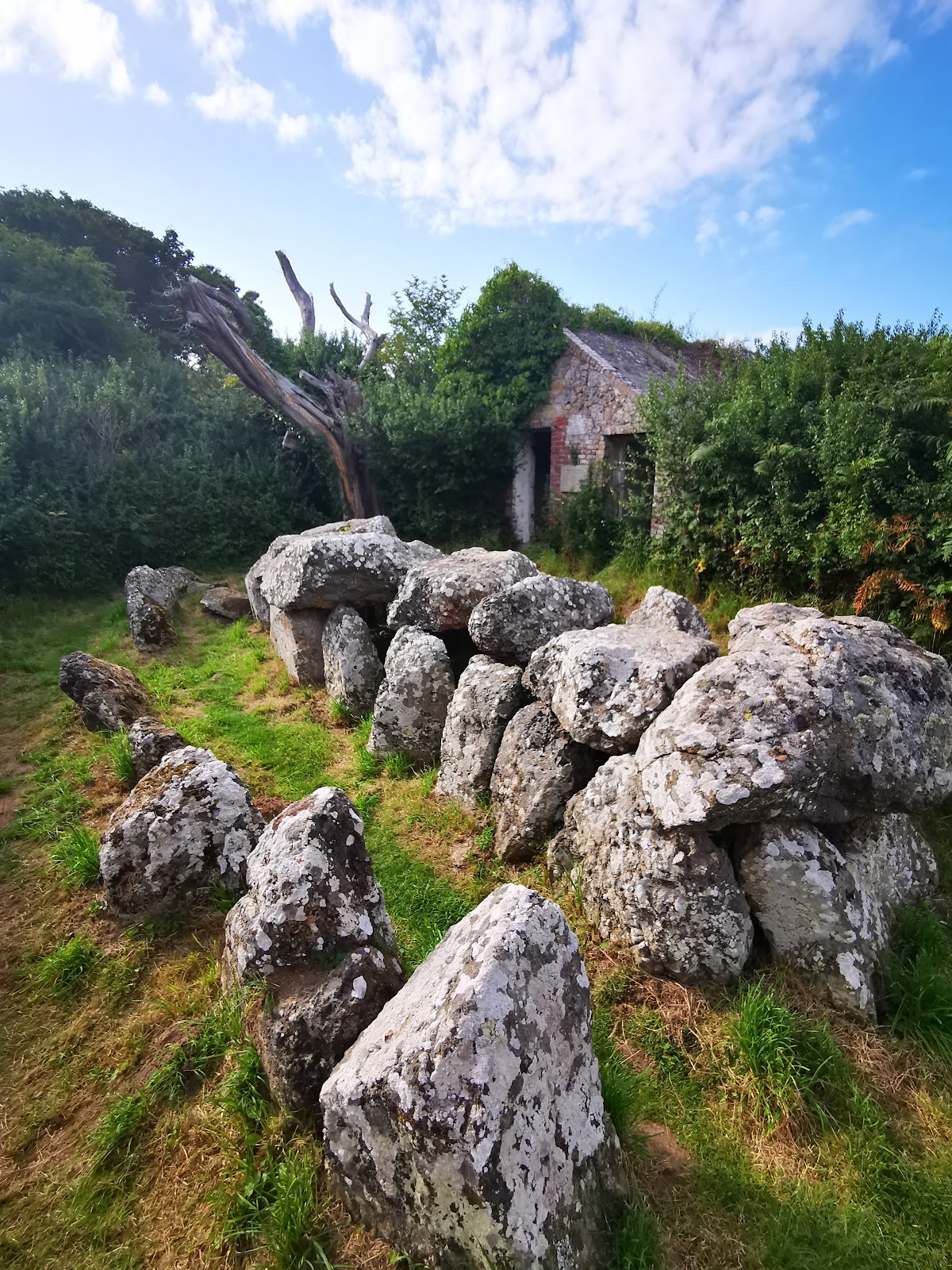
Located in the parish of Saint Martin along the northeastern coastline, Le Dolmen du Couperon represents a different architectural style known as an allée couverte, or gallery grave. Dating back roughly 5,000 years to between 3250 and 2250 BCE, this monument features an elongated rectangular chamber approximately eight metres long. Unlike the circular chambers of typical passage graves, a gallery grave offers a continuous corridor design.
Surrounding the central chamber is an outer ring of eighteen upright stones, known as peristaliths, which originally retained a long protective earthen mound. Excavations at the site have yielded flint flakes and fragments of ancient pottery. Today, the exposed stone gallery allows visitors to observe the layout of the capstones and structural orthostats, situated quietly near coastal lanes and historical maritime fortifications.
Western Headlands and Coastal Megaliths: Le Pinacle and St Ouen's Dunes
While passage graves and gallery tombs represent the most visible funerary monuments on the island, Jersey's prehistoric landscape also encompasses dramatic natural landmarks and expansive coastal terrain that witnessed intensive human activity during the Neolithic period. On the rugged northwest coast, Le Pinacle rises as a majestic natural granite stack towering straight up from the coastal cliffs. This striking geological formation served as a revered focal point for ancient societies across thousands of years.
From the clifftop footpath above, visitors looking down toward the sea can discern deliberate structural patterns formed by ancient stones clustered around the base of the granite stack. Excavations and surveys of these stone remains reveal that the location was actively occupied and utilised across multiple distinct cultural eras, encompassing the Neolithic period, the Iron Age, and the Gallo-Roman era. During these centuries, Le Pinacle functioned as an exceptionally important ritual site as well as a prominent centre for prehistoric stone axe manufacturing. The stone tools produced at this coastal workshop were of such significance that axes originating from Le Pinacle have been uncovered across Jersey and on the nearby French mainland, providing undeniable archaeological proof of early maritime trade and cross-channel contact.
While the clifftop offers safe, sweeping panoramic views of the rock stack and the surrounding archaeological arrangements, reaching the base directly is another matter. A steep, exposed path descends the cliffside to the foundation of Le Pinacle; however, this descent is inherently dangerous and is not recommended unless visitors are exceptionally fit, sure-footed, and agile.
Further south along the coast, the expansive five-mile crescent of St Ouen's Bay holds another crucial chapter in Jersey's Neolithic story. In prehistoric times, this sweeping western coastline provided ideal conditions for permanent human habitation, offering abundant marine resources, fresh water from sources like St Ouen's pond, and fertile low-lying soils suitable for early agriculture. Over time, shifting winds and moving sand dunes completely inundated these settled coastal plains, compelling farming families to abandon their homesteads. Today, walkers exploring the sand dunes around St Ouen's Bay can still discover surviving Neolithic standing stones and deliberate stone alignments, standing as silent monuments to the vanished farming communities that once thrived along the western shore.
Additional Prehistoric Sites: La Sergenté, Mont Ubé, and Ville-ès-Nouaux
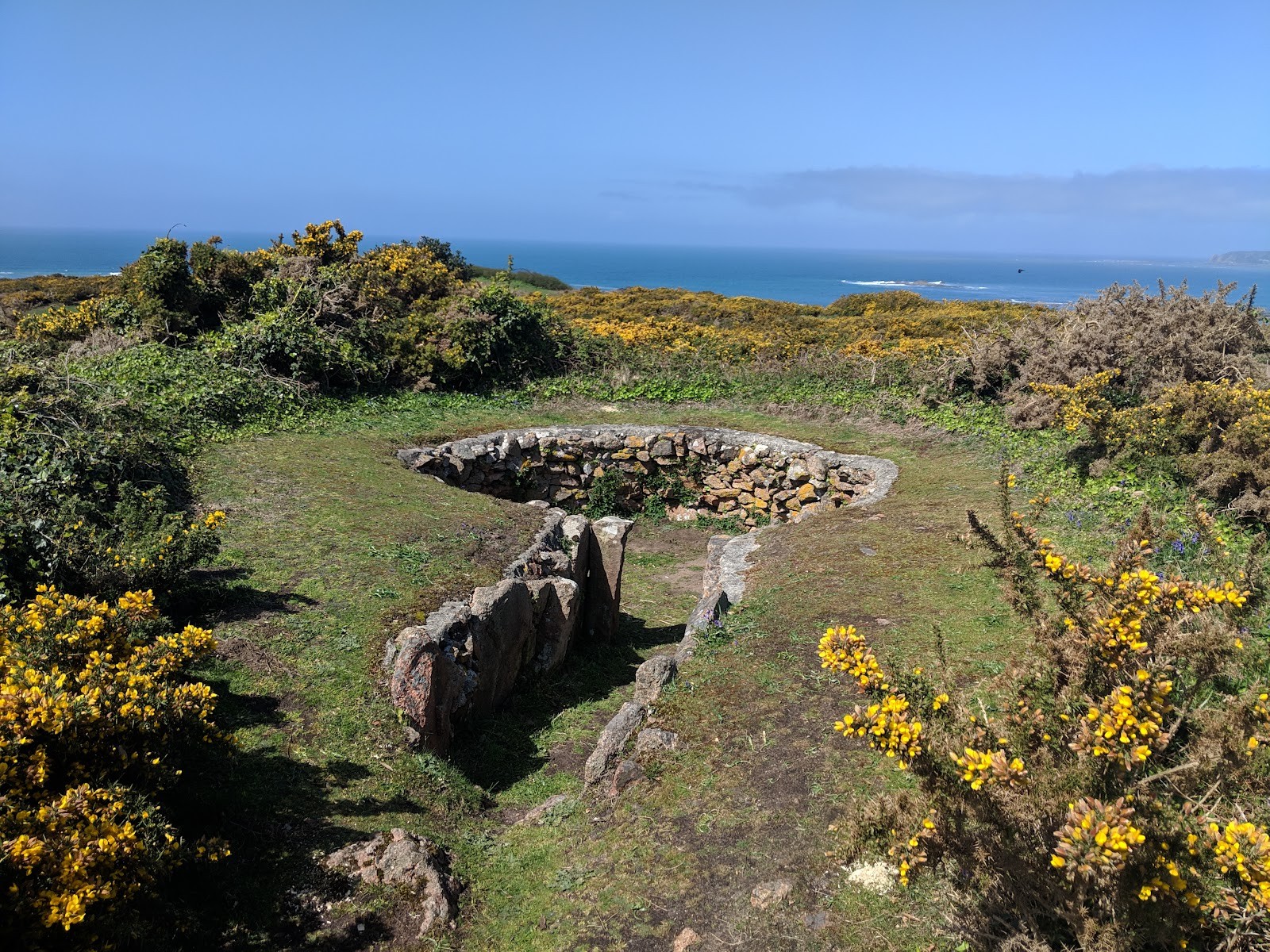
For enthusiasts eager to see more of Jersey's ancient monuments, several other sites offer unique insights into regional megalithic variations:
- La Sergenté: Often considered an exceptionally old tomb on the island, this ancient passage grave was built approximately 6,500 years ago, displaying early stone construction techniques.
- Ville-ès-Nouaux: Situated in a public park roughly three kilometres west of St Helier, this accessible site features a stone circle alongside the remnants of a Neolithic gallery grave.
- Dolmen de Mont Ubé: A passage grave located on elevated terrain that has suffered partial damage over the centuries and requires a steep uphill climb to visit.
Each of these locations illustrates how prehistoric architecture adapted across different parishes, from coastal parks just outside the main town to secluded hillside locations.
Getting Around: Accessing Jersey's Dolmens
Planning an itinerary to explore Jersey's ancient dolmens and prehistoric monuments is remarkably convenient, as many of the island's primary archaeological sites are situated within reach of rural paths, coastal trails, and local bus connections. Because prehistoric monuments in Jersey are dispersed across both inland parishes and dramatic coastal perimeters, visitors can easily coordinate self-guided outings by combining public transit with scenic walking routes. When organising your journeys between these megalithic structures, keep in mind the following practical travel options and access considerations:
- La Hougue Bie: Accessible via public buses operating from St Helier directly to the monument. Alternatively, visitors can take advantage of the more frequent bus services running from St Helier to Five Oaks, completing the final stretch on foot with a pleasant walk along local country roads to reach the site.
- La Pouquelaye de Faldouet: Situated along a quiet country lane on high ground overlooking the eastern coastline, this impressive passage grave can be accessed on foot via a steady uphill walk starting from the harbour area of Gorey.
- La Sergenté: This remarkably ancient tomb in the western parishes is straightforward to reach using a simple combination of bus transport and gentle walking routes along rural roads and parish paths.
- Ville-ès-Nouaux: Located in a park approximately 3 km west of St Helier, this accessible stone circle and gallery grave remnant can be reached quickly on foot via an easy, level walking route directly alongside the main coast road.
- Le Pinacle: Set dramatically along the northwest coastline, the prehistoric stone patterns at the base of the rock stack are clearly visible from clifftop vantage points. While a steep path descends toward the base, tackling this descent is considered dangerous and is only recommended for fit, agile visitors equipped for demanding terrain.
- Dolmen de Mont Ubé: Reaching this partially damaged passage grave requires a noticeably steep uphill climb along rural terrain, meaning that it is generally recommended only if you are particularly keen and wearing suitable, sturdy walking shoes.
By coordinating journeys across the island's bus network and linking them to quiet parish lanes and coastal footpaths, enthusiasts of prehistoric heritage can easily connect eastern monuments such as Faldouet and Le Couperon with expansive western sites including Grantez and the coastal dunes of St Ouen's Bay.
Preserving Jersey's Megalithic Treasures
Jersey's prehistoric monuments are fragile remnants of human history that have survived for five to six thousand years. Because they are open to the elements and freely explored by visitors, treating these sites with respect ensures they remain intact for future generations. When touring passage graves and dolmens, avoid climbing on top of delicate capstones or disturbing drystone revetments. Staying on established footpaths around the chambers protects the surrounding earthworks from erosion. By taking care as you explore, you help safeguard Jersey's megalithic landmarks and preserve their timeless atmosphere.
Cover photo: La Hougue Bie Museum
By Alyssa.
Sources and further information
- La Hougue Bie – Société Jersiaise
- La Pouqelaye de Faldouet Dolmen
- Le Dolmen du Couperon
- Passage Graves And Dolmens Of Jersey: Exploring The Prehistoric Sites
- Top 5 Megalithic Sites in Jersey - Jersey Wanders
Sources checked: 2026-11-15.