Beach and Bay
A Guide to Portelet Bay: Steps, Parking, Janvrin's Tomb, and Visiting Tips
Updated 10 November 2026
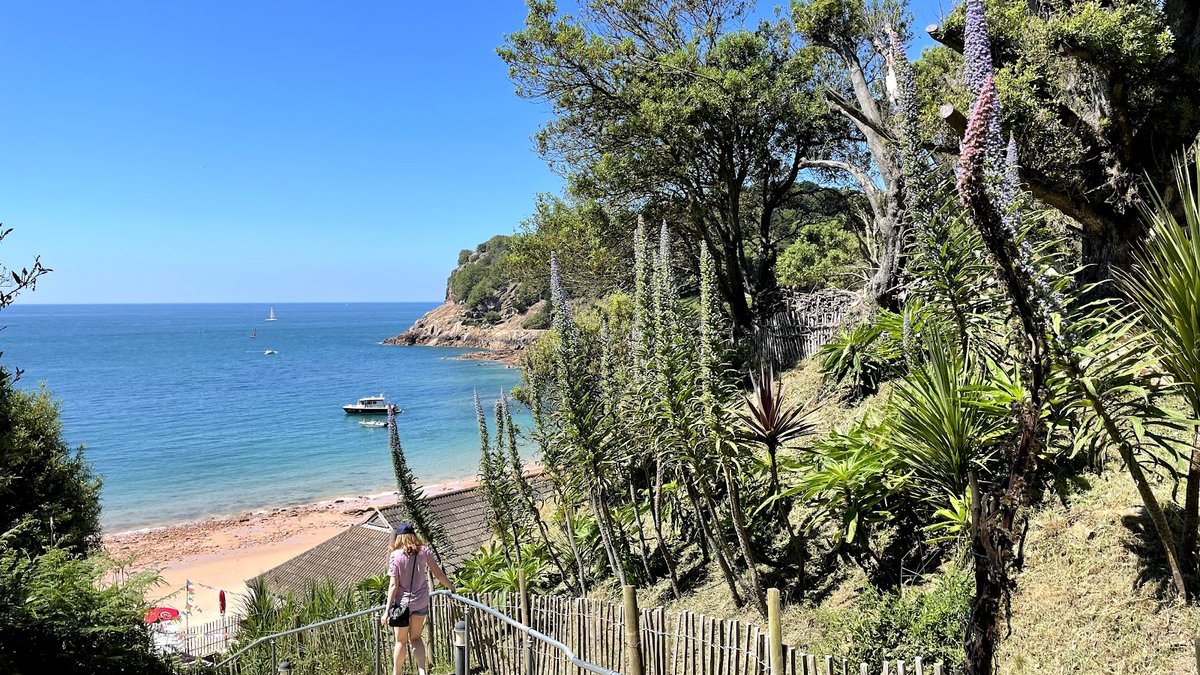
Tucked beneath high coastal cliffs on Jersey’s southern shoreline, Portelet Bay is one of the island's most striking and sheltered coves. Set apart from the larger, more commercial stretches of sand nearby, such as St. Brelade's Bay Beach and its eastern neighbour Ouaisne Bay, Portelet maintains a distinct, secluded atmosphere. Its golden sand, clear waters, and prominent tidal islet create a memorable coastal landscape, but visiting here requires a bit of practical forethought. Unlike bays serviced by level promenades or vehicular slipways, reaching Portelet involves descending a long, steep cliff path. In this guide, I share the essential details you need to plan a trip, exploring how to navigate the steep descent, where to find parking on the headland, how to safely explore the historic islet of Île au Guerdain, and what amenities await down on the sand.
Understanding the Portelet Bay Steps and Physical Access
Access to Portelet Bay requires navigating a long flight of steep cliff steps descending from the clifftop car parks. The pathway combines stair treads with pebbly and sandy sections underfoot. While this difficult approach helps keep the beach relatively uncrowded, ascending from the shore is strenuous—particularly in warm weather or when carrying heavy equipment. Consequently, the route is unsuitable for wheelchairs, loaded pushchairs, or visitors with reduced mobility, though the scenic clifftop viewpoint can still be enjoyed without taking the stairs.
Clifftop Parking Options for Visiting Portelet Bay
Because there is no road leading down to the shore, all vehicular access stops on the headland above. Drivers visiting the area have several designated parking areas situated along the top of the cliff. Knowing where to head before you arrive can save significant time on busy coastal days.
The primary parking facilities serving the bay include:
- Portelet Bay Parking: A designated public parking area positioned at the top of the cliff, serving as one of the direct staging points for the descent to the beach steps.
- Portelet Common Parking: Located adjacent to the open headland of Portelet Common, offering another spot to leave your vehicle before walking across to the main path.
- Portelet Inn Parking: Situated near the historic inn at the top of the headland, convenient for those combining a coastal walk with refreshments on the cliff.
While having several car parks along the headland is convenient, capacity is inherently limited. On warm weekends and during peak summer periods, spaces across these parking areas fill up quickly. Arriving early in the day or planning your visit for quieter hours can help you avoid turning around in search of alternative parking.
Arriving by Public Transport: Bus Routes from St Helier
If you prefer not to drive, or if you are staying in the capital and wish to avoid parking congestion entirely, taking the local bus is a straightforward alternative. The public transport link running from St Helier out towards this corner of the island makes visiting the bay very manageable without private transport.
Public transport access is provided by bus route 12A, which operates from Liberation Station in St Helier and travels out towards Corbière. The route allows visitors to journey directly from town into the parish of St Brelade, stopping near the access paths on the main road above the bay. From the bus stop, you can walk along the clifftop approaches toward the start of the cliff path.
Opting for the bus spares you the need to navigate tight vehicle spaces on popular summer afternoons. It also allows you to link your trip into a broader linear hike along the southwestern coast, perhaps walking across the common or connecting with surrounding headland trails before catching a return bus back to Liberation Station.
Île au Guerdain and Janvrin's Tomb: History and Tidal Safety
Near the centre of the bay stands Île au Guerdain, a rocky tidal islet crowned by a historic tower known as Janvrin's Tomb. It marks the burial site of Philippe Janvrin, a Jersey sea captain who died in 1721 while kept offshore under quarantine. At lower water, an exposed sand causeway permits access from the beach to the islet. However, this path is submerged as the tide rises; visitors must walk back before water begins crossing the sand and should never rely on swimming back across tidal currents.
Swimming Conditions and Lifeguard Information
Portelet Bay's south-facing orientation and high backing cliffs create a sheltered, suntrap setting that attracts swimmers throughout the warmer months. The surrounding headlands offer valuable shelter from prevailing westerly winds, meaning the water within the cove is often calmer than on the more exposed western beaches like St Ouen's Bay.
Despite this natural protection, swimmers must remember that Portelet Bay remains an open body of sea water connected directly to coastal currents. Swell, sea chop, and boat wash can enter the cove. Furthermore, around Île au Guerdain and the rocky edges of the bay, submerged rocks can be difficult to spot, especially as the water rises and covers them. Water depths change continuously across the tidal cycle, and tidal currents move through the channels on either side of the islet.
An essential safety consideration for all visitors is that Portelet Bay is not patrolled by RNLI lifeguards. Anyone entering the water must take full responsibility for their own safety. If you plan to swim, stay well within your physical depth and comfort zone, be cautious around the rocky margins, and avoid treating the water around the central island as an enclosed or protected swimming pool.
The Portelet Snorkel Trail and Marine Conservation
Beyond standard sea swimming, Portelet Bay is a premier destination for underwater exploration. It is home to Jersey's first official snorkel trail, designed to showcase the diverse marine life and habitats that flourish around the rocky fringes of the bay and along the flanks of Île au Guerdain.
The waters here benefit from a high level of environmental protection. Since May 2022, Portelet Bay has been formally designated as a No Take Zone. Under this statutory protection, all forms of fishing—whether recreational, shore-based, or commercial—are strictly prohibited within the bay. The aim of the No Take Zone is to allow the local marine environment to recover naturally, regenerate marine flora and fauna, and facilitate ongoing scientific research into Channel Island coastal ecology.
Snorkellers venturing onto the trail can observe this undisturbed underwater environment firsthand. However, navigating the snorkel trail safely requires careful personal assessment. Visibility in the water, changing tides, currents around the islet, cold water temperatures, boat movements, and submerged hazards must all be taken into account. Swimmers should only embark on the snorkel trail in suitable sea conditions and with adequate equipment and confidence in their swimming stamina.
Watercraft, Kayaking, and Beach Logistics
The clear, calm waters make the cove an attractive spot for watercraft, such as sea kayaks and paddleboards. However, the physical geography of the bay dictates how these craft can realistically be used.
Because there is no roadway, ramp, or vehicle slipway onto the beach, bringing watercraft down to the sand is a major logistical challenge. Carrying heavy kayaks, rigid paddleboards, or bulky equipment down the steep cliff staircase is impractical and physically exhausting for most people. As a result, paddlers and small boat operators generally launch from other accessible harbours or beaches along the Jersey coast and travel into Portelet Bay by sea.
Those arriving from the water must navigate with heightened vigilance. Because the bay is a popular haven for swimmers, snorkellers exploring the nature trail, and rock poolers around the edges, boaters and kayakers must keep a sharp lookout for people in the water and steer well clear of submerged rocky outcrops.
Beach Amenities: The Portelet Bay Café and Clifftop Facilities
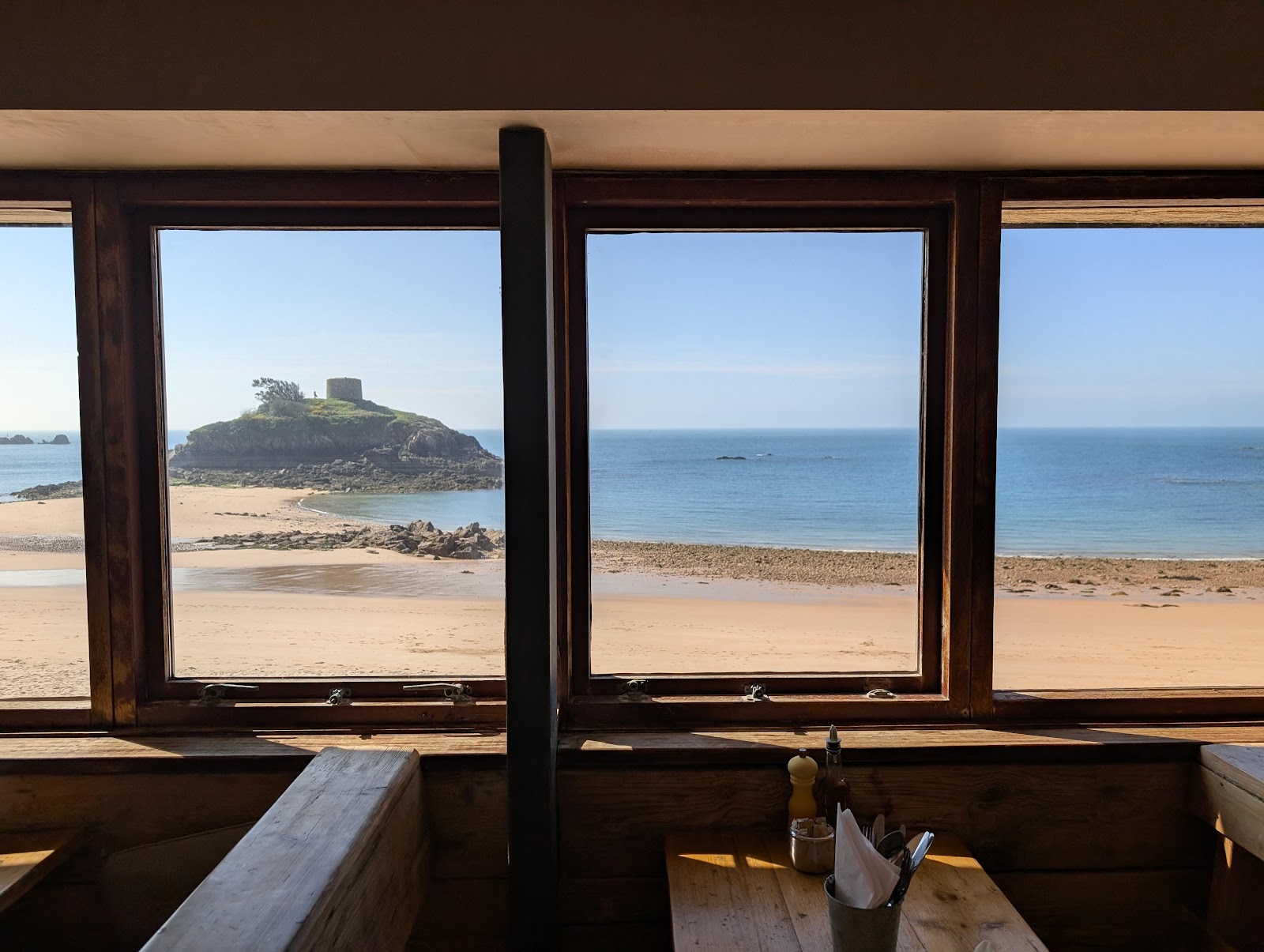
Despite its steep, natural setting, visitors to Portelet Bay have access to excellent on-beach refreshments. Located directly down on the sand is the Portelet Bay Café. This venue provides visitors with wood-fired pizzas, fresh seasonal fish, salads, and cakes, making it a wonderful spot to sit and enjoy a meal right beside the shoreline. Crucially for beachgoers, the café also provides customer toilets during its opening hours, which spares patrons the exhausting trek back up the cliff path just to use the facilities.
Because opening hours and seasonal schedules vary throughout the year, checking ahead before making a dedicated trip down the steps is sensible, particularly if you are counting on the café for lunch or drinks. Booking a table in advance is also recommended during peak summer days.
Up at the top of the cliff, above the descent steps, you will find additional facilities. The Portelet Inn sits on the clifftop, offering pub fare and wide views over the water. This provides a convenient place to pause for a drink or meal either before heading down the trail or immediately after tackling the steep climb back to the parking area.
Dog Regulations and Practical Shoreline Etiquette
Portelet Bay is welcoming to four-legged visitors, but pet owners need to follow seasonal restrictions designed to balance beach use between dog walkers and summer sunbathers:
- Year-Round Access: Dogs are permitted on the beach throughout the entire year.
- Seasonal Lead Rules: From 1 May to 30 September, dogs must be kept on a lead between 10:30 am and 6:00 pm. Outside of these daytime hours during the summer window, they may be exercised off-lead.
- Winter Freedom: During the autumn and winter months (from 1 October through 30 April), dogs are free to run off-lead at any time of day.
When walking dogs or exploring the beach with family, make sure to take any litter back up the cliff with you, as there are no roadside refuse teams down on the sand. Helping to preserve the clean, unspoiled nature of the bay ensures it remains an inviting sanctuary for everyone.
Summary Comparison: Visiting Portelet Bay
Practical details for visiting Portelet Bay:
| Topic | Visitor Information |
|---|---|
| Access & Steps | Steep cliff steps with pebbly and sandy patches; strenuous ascent. Unsuitable for wheelchairs or reduced mobility. |
| Parking | Portelet Bay Parking, Portelet Inn Parking, and Portelet Common Parking situated above the cliffs. |
| Bus Route | Bus 12A runs between St Helier (Liberation Station) and Corbière. |
| Île au Guerdain | Tidal islet accessible via a sandy route at low water; return before the rising tide cuts off the path. |
| Safety & Rules | Not RNLI lifeguarded. No Take Zone prohibits all fishing. Dogs permitted year-round (on lead 10:30 am–6:00 pm, 1 May–30 Sept). |
| Facilities & Craft | Portelet Bay Café on the beach with customer toilets; Portelet Inn on the cliff. No beach slipway; kayaks arrive by sea. |
Final Tips for an Enjoyable Visit to Portelet Bay
Visiting Portelet Bay is one of the most rewarding coastal outings in Jersey, provided you plan around its physical geography. Pack lightly so that carrying your belongings down and up the steep staircase does not become an ordeal. Wear supportive footwear for the steps, particularly where loose gravel meets the sand. Check the tide tables before you set out so you can time your visit to Janvrin's Tomb safely, and remember to respect the marine life within the No Take Zone while swimming or snorkelling. By planning your parking or bus arrival ahead of time and budgeting enough energy for the return climb, you can fully enjoy this secluded, sun-drenched southern cove.
Cover photo: Portelet Bay
By Alyssa.
Sources and further information
Sources checked: 2026-11-10.