Travel Guide
Visiting Grosnez Castle: Walking Routes, History, and Coastal Views in St Ouen
Updated 2 November 2026
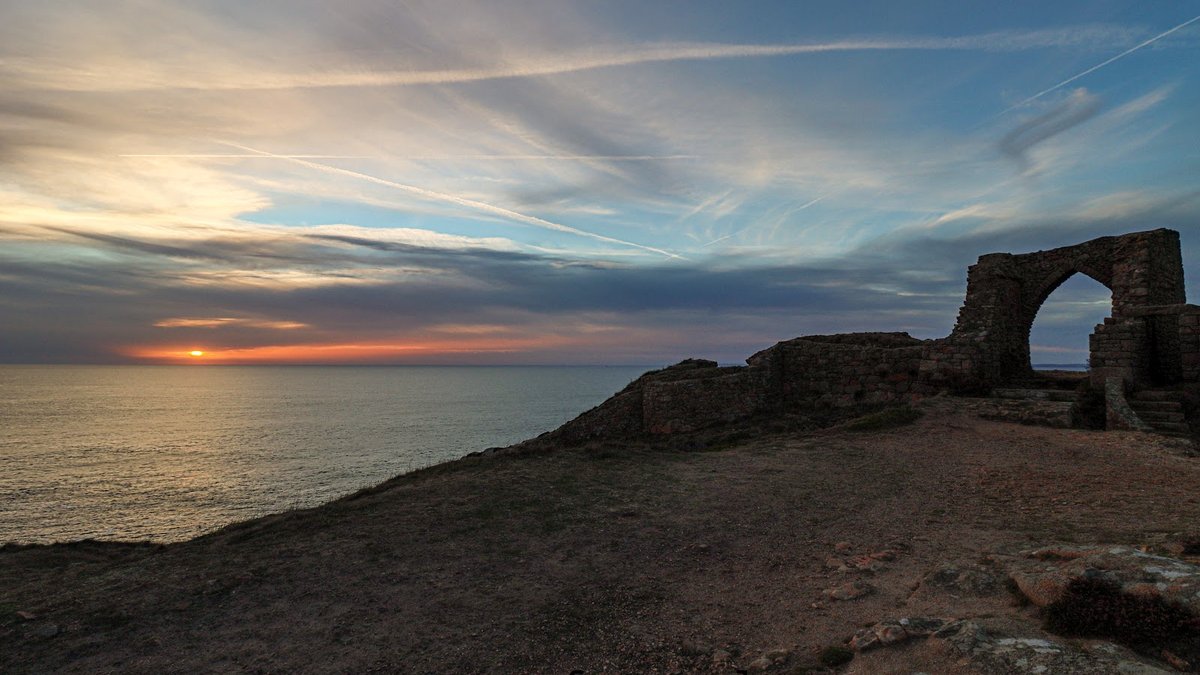
High on the rugged headland of north-west Jersey, the wind sweeps across dramatic cliffs where medieval stones stand against the Atlantic sky. If you are planning an excursion to the parish of St Ouen, Grosnez Castle offers an evocative glimpse into the island's turbulent maritime past, surrounded by raw coastal scenery. Today, the fortress survives as an open, atmospheric ruin that invites walkers, nature enthusiasts, and history lovers to explore its weather-beaten masonry and look out across open waters.
Standing on these high bluffs, it is easy to see why this particular vantage point was chosen centuries ago. The location commands extensive panoramas over the Channel Islands, providing natural defences that were crucial to Jersey's historical maritime security. Whether your goal is to wander through the ancient gatehouse, take in a stunning seaside sunset, or embark along the cliff paths leading toward Plemont, having practical knowledge about accessibility, local terrain, and parking arrangements will ensure you get the most out of your trip. Below, I have gathered practical insights and established facts to help you organise your visit to this remote corner of Jersey.
The Origins and Meaning of Grosnez
To fully appreciate the atmospheric presence of Grosnez Castle, it is invaluable to understand how the coastal geography shaped both its historical identity and its distinctive name. The name Grosnez is deeply rooted in early maritime history, deriving directly from the Old Norse words grar nes, which translate into English as "grey headland." For early sailors navigating the waters around the Channel Islands, this massive promontory stood out distinctly from sea level as a bold, muted outcrop of granite rising above the crashing surf of the English Channel.
The phrase grar nes was not merely an arbitrary title, but an exact visual description of how the sheer bluffs present themselves when viewed from the sea. Approaching from open water, voyagers encountered towering, pale grey rock faces that contrasted with the surrounding waves and green turf. This descriptive naming reflects the Norse seafarers who traversed these waters, leaving behind geographical markers along Jersey's coastline that endured across generations.
As regional administration and cultural influences shifted over the centuries through Norman French and local Jèrriais forms, the original Norse phonetics gradually coalesced into the contemporary spelling and pronunciation of Grosnez. While casual visitors might mistakenly assume a French etymological derivation related to facial features, the maritime context of the Norse grey headland remains historically and visually authentic. Standing at the perimeter of the ruins today, one can easily see why ancient mariners singled out this prominent geological bluff, whose granite forms an austere, enduring bastion against the prevailing maritime elements.
The coastal environment that prompted the Norse designation also explains why this particular headland in St Ouen became such a critical location for fortification during the 14th century. Positioned on the extreme north-western corner of Jersey, the rocky grey promontory commanded an unbroken vantage point over the offshore waterways, ensuring that approaching vessels could be observed well before they could initiate a landing. The natural prominence celebrated in its ancient name therefore provided the identical tactical clarity that later drew medieval engineers to build refuge walls upon its heights.
The 14th-Century Fortress and Its Strategic Purpose
The construction of Grosnez Castle dates to the 14th century, specifically around the year 1330. Historical records indicate that it was built under the direction of Sir John des Roches during a period of recurring regional conflict. Unlike major administrative strongholds or opulent seigneurial residences, the primary role of this fortress was defensive and community-centred: it was established to offer local farming families a secure place of refuge whenever French naval raids threatened the island's western and northern shores.
Life in rural St Ouen during the 1300s was fraught with the hazards of sudden coastal incursions. The rural population required a sanctuary that was within reachable distance of their fields and pastures. Sir John des Roches positioned the fortress to act as a secure redoubt, giving local islanders vital shelter where they could gather their livestock and families and hold out until hostile fleets withdrew from coastal waters.
Natural Cliff Architecture and Fortification Defences
The defensive engineering at Grosnez is an ingenious example of working in harmony with forbidding natural geography. Perched atop sea cliffs rising approximately 60 metres above the rolling swell, the castle is protected on three sides by sheer, inaccessible precipices that plummet straight into the ocean. Approaching the fortification from the water would have been virtually impossible for raiders, effectively eliminating the need for extensive curtain walls along the coastal flanks.
On the landward side, where the headland connects back to the plateau of Les Landes, natural barriers did not exist. To resolve this vulnerability, builders excavated a substantial ditch directly into the solid bedrock across the neck of the promontory. This rock-cut ditch isolated the castle compound from landward assaults, forcing any approaching force into a narrow and heavily exposed frontal choke point.
Surviving Masonry: The Gatehouse and Wall Footings
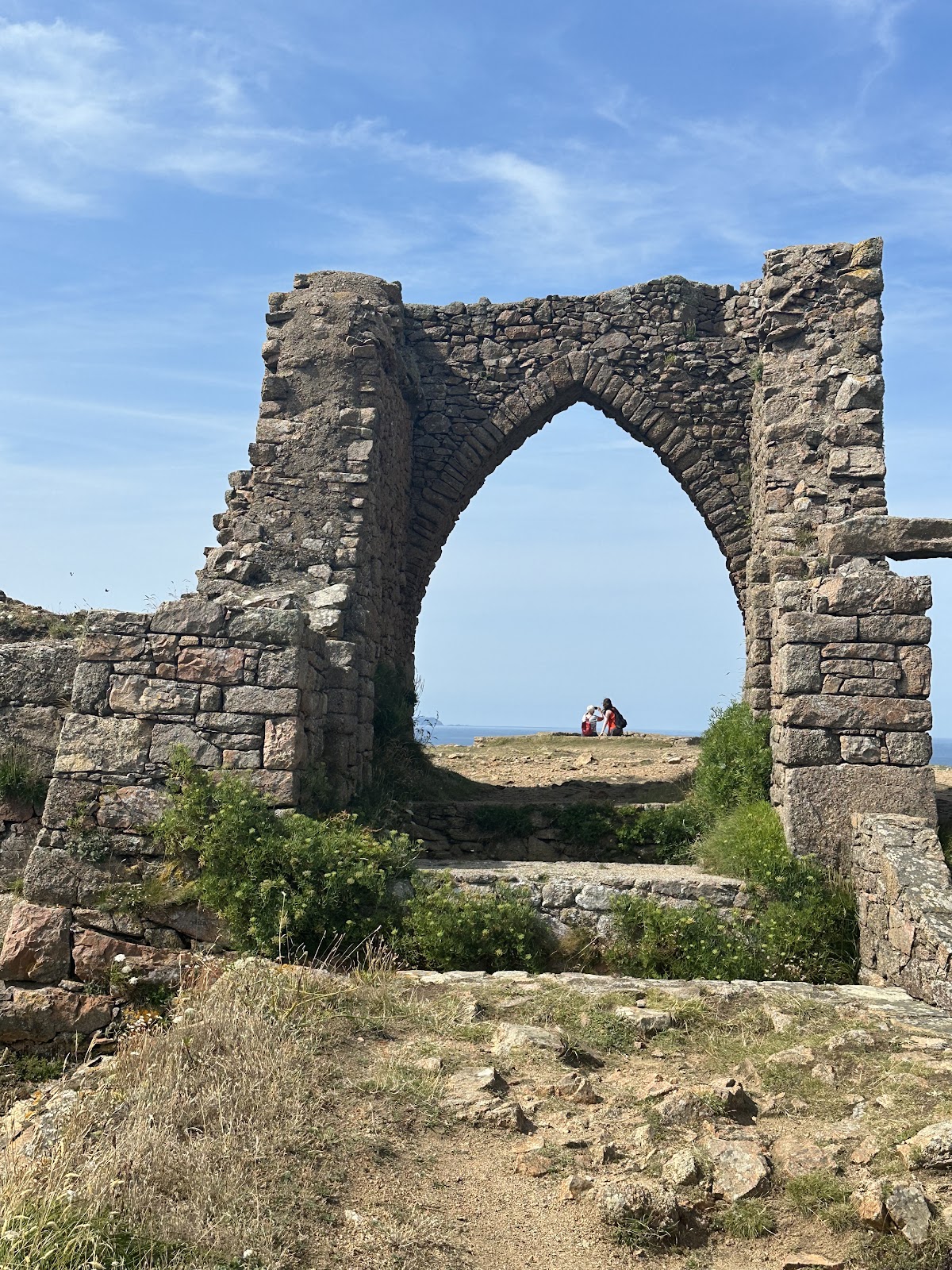
Today, visitors will find that centuries of weathering and historic conflicts have reduced much of the complex to low outlines. However, the prominent stone gatehouse remains standing as the only substantial surviving structure of the original fortress. This central entryway was engineered to present a formidable obstacle to hostile forces, once featuring both an operative drawbridge across the excavated bedrock ditch and a heavy portcullis designed to seal the portal against forced entry.
Surrounding the gatehouse, the foundations and footings of the exterior wall define the historical footprint of the interior enclosure. Walking among these low stone lines allows you to envision where temporary timber dwellings, livestock corrals, and defensive platforms once stood. The surviving arch of the gatehouse creates a dramatic frame against sea and sky, serving as a focal point for photographers and curious explorers alike.
Exploring the Ruins and Enjoying the Coastal Sunsets
For modern visitors, Grosnez Castle offers an open-air historical experience. Members of the public are permitted to explore the castle ruins freely, making it an unregimented and relaxing place to absorb the coastal atmosphere. You can wander directly through the arched gatehouse, inspect the rock-cut ditch, and pace out the perimeter footings while listening to seabirds overhead and waves breaking against the rocks 60 metres beneath.
Beyond its military past, the site is widely celebrated for its sweeping panoramic views. On clear days, the expansive vista stretches across open water toward neighbouring Channel Islands, providing a vivid sense of the archipelago's interconnected geography. As the afternoon draws to a close, the west-facing aspect of the promontory makes it one of the premier locations in Jersey for admiring coastal sunsets, with the setting sun casting brilliant orange and gold tones across the grey granite stonework.
Walking the Grosnez to Plemont Trail
A visit to Grosnez Castle pairs naturally with a scenic hike along the cliff paths. The route connecting Grosnez to Plemont serves as the opening stage of Jersey's famous north coast cliff path network. Starting directly from the headland, the trail traces through the wild, windswept heathland of Les Landes, guiding walkers along dramatic clifftops before gradually descending toward the sheltered inlet and bay at Plemont.
For walkers wishing to incorporate the route into their itinerary, the coastal trek between Grosnez and Plemont features several key measurements and terrain characteristics:
- Total Distance: The coastal hike extends for a total distance of 5.6 km along the undulating north-west clifftops.
- Elevation Profile: The trail accumulates approximately 169 metres of elevation gain across its length, taking hikers through a sequence of moderate climbs and descents as the cliffs rise and fall.
- Surface Breakdown: The physical path is comprised of 77% natural ground, 12% gravel pathing, and 12% paved surface sections, providing an authentic outdoor trail experience through coastal terrain.
Because natural ground accounts for 77% of the total walking surface, conditions along the trail are directly influenced by coastal weather. Unpaved earth and turf sections can soften after seasonal rain, while exposed stone footings and uneven ground demand attentive footwork. Wearing sturdy walking footwear with sound grip ensures steady traction across both the natural dirt surfaces and the 12% gravel stretches.
Tracing the open expanses of Les Landes, the trail rewards walkers with sweeping sea vistas extending out across the Channel toward neighbouring islands. The route remains a standout section of Jersey's northern coastline, offering an immersive journey from the 14th-century ruins of Grosnez through protected heathland down into Plemont.
Practical Location and Parking Details
Planning your journey to north-west Jersey is straightforward, whether you choose to travel by personal vehicle or public transport. Grosnez Castle is formally recorded at the following listed address:
- Listed Location: La Route De Grosnez, St. Ouen, Jersey, JE3 2AD.
For visitors driving to the site, a dedicated car park is situated conveniently close to the trail start, located just 337 metres away. This close proximity makes it simple to park and take a leisurely walk across the heathland toward the ruins without an arduous uphill trek right at the beginning of your journey.
Those opting for public transport will find a bus stop positioned 305 metres from the start of the trail. This allows walkers to arrive easily, explore the ruins, and continue along the 5.6 km coastal path to Plemont without needing to retrace their steps to a vehicle.
Visiting Tips for the St Ouen Headland
Given the exposed maritime nature of Jersey's north-west coast, keeping several practical planning and safety considerations in mind will make your outing smooth, safe, and memorable:
- Prepare for Coastal Weather: Situated upon an exposed clifftop rising approximately 60 metres above the sea, the headland at Grosnez is directly subject to maritime conditions and Atlantic gusts. Even during sunny summer outings, sudden breezes along the headland can bring a sharp chill, making a light windproof layer or water-resistant jacket a wise addition to your daypack.
- Observe Cliff Margins and Ground Hazards: The sheer cliffs that formed a natural barrier protecting the medieval fortification on three sides drop sharply into the sea below. Visitors should remain strictly mindful of their footing when wandering around the masonry footings and along natural ground footpaths. Keep a safe buffer from unbarricaded edges, especially in blustery conditions or when trails are slick from coastal mist.
- Navigate Uneven Ground with Care: Across both the castle site and the surrounding Les Landes heathland, footpaths consist primarily of natural terrain, loose stone, and grass. Sensible walking boots or supportive footwear with good tread will ensure secure stepping when exploring the castle walls, surviving gatehouse, and connecting paths.
- Allow Ample Time for Sunset and Heritage Exploration: Grosnez Castle is widely celebrated for its unobstructed westward perspectives over the sea and neighbouring Channel Islands at dusk. To enjoy the sunset comfortably, plan your arrival with enough daylight to inspect the historic gatehouse remnants, examine the rock-cut defensive ditch, and take in the maritime landscape before fading light makes footpaths more challenging to navigate.
Whether you travel to St Ouen specifically to explore the 14th-century gatehouse or set out across the heathland of Les Landes along the cliff path to Plemont, Grosnez Castle remains one of Jersey's most evocative, accessible, and historically captivating coastal landmarks.
Cover photo: Grosnez Castle
By Alyssa.
Sources and further information
- Grosnez Castle - Vibrant Jersey
- Grosnez Castle
- Grosnez to Plemont Trail | 5.6km, Difficulty: 2 out of 5 | Jersey
Sources checked: 2026-11-02.